These birds boast some of the most unusual, jaw-dropping beaks in the animal kingdom—each evolved for a truly specialized purpose.
1. Black Skimmer
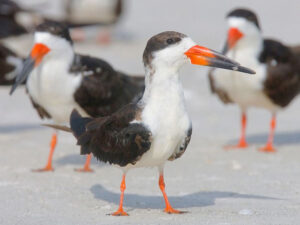
The black skimmer flaunts one of the most unusual bills in North American birdlife. Its long, narrow beak features a lower mandible that protrudes beyond the upper one—perfect for its signature fishing method. As it flies just above the water’s surface, the bird drags its lower mandible through the water until it senses a fish, snapping its beak shut in a flash. This knife-like bill gives the black skimmer its name and its edge—it’s the only bird in the Americas that feeds this way.
2. Rhinoceros Hornbill
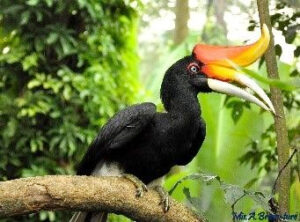
This bird’s name is as bold as its appearance. The rhinoceros hornbill sports a spectacular casque—a hollow, horn-like growth atop its massive beak. Found in Malaysia and parts of Southeast Asia, this bill isn’t just for show; it helps the bird reach fruit on delicate branches and even amplifies its booming calls across dense forests.
3. Roseate Spoonbill
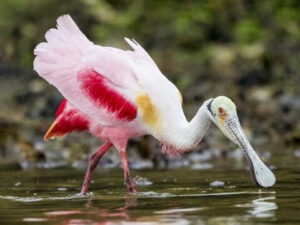
With its spoon-shaped bill and bubblegum-pink plumage, the roseate spoonbill stands out in both form and function. It sweeps its bill side-to-side in shallow water to filter out shrimp, insects, and other aquatic morsels. Its coloration comes from the pigments in the crustaceans it devours. Once nearly hunted to extinction, this flashy wader is making a comeback in the marshes of the U.S. Gulf Coast.
4. Red Crossbill
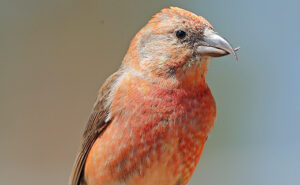
What looks like a crooked beak is actually a perfect pinecone-cracking tool. The red crossbill’s upper and lower mandibles cross at the tips, allowing it to pry apart tightly sealed cone scales and access the seeds inside. This quirky-looking finch thrives in coniferous forests where its unique bill is right at home.
5. Shoebill
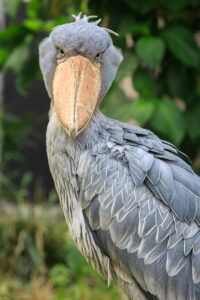
One glance at this swamp-dwelling African bird, and you’ll see where it gets its name. The shoebill’s massive, clog-shaped beak has razor-sharp edges and a hooked tip, making it a deadly weapon against lungfish and other slippery prey. Though it resembles a stork, it’s genetically closer to herons and pelicans.
6. Long-Billed Curlew
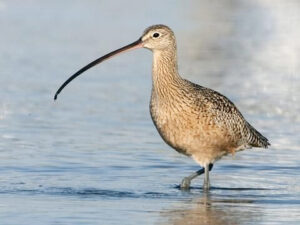
Sporting the longest beak of any North American shorebird, the long-billed curlew uses its sickle-shaped bill to probe deep into mudflats for crabs and worms. Females have even longer, more curved bills than males—an adaptation that may help them access different food sources during breeding season.
7. Sword-Billed Hummingbird
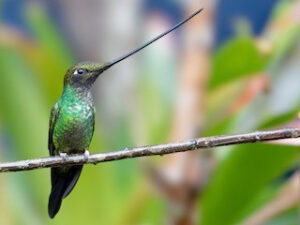
This South American marvel is the only bird in the world whose beak is longer than its entire body. The sword-billed hummingbird’s dramatic bill allows it to feed on flowers with long corollas, reaching nectar that’s inaccessible to other birds. It even has to groom with its feet and perch with its head tilted to balance the weight.
8. Great Hornbill
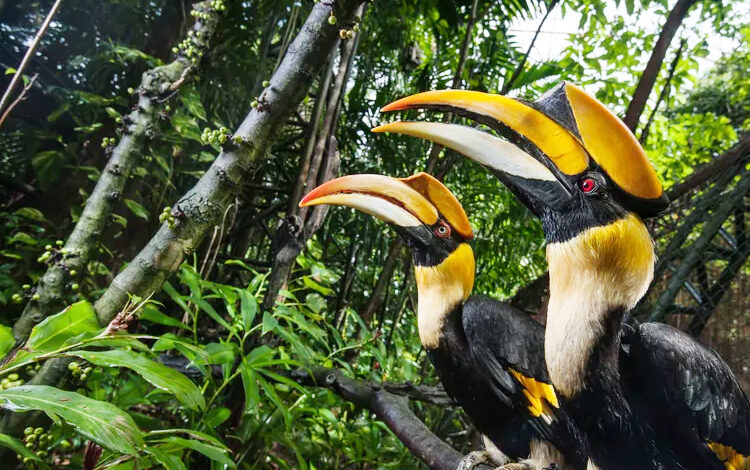
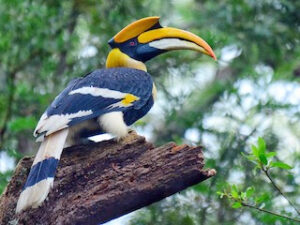
With its enormous, banana-yellow bill topped by a dramatic casque, the great hornbill is a tropical showstopper. Males sometimes clash midair, using their casques to spar during mating contests. These birds, native to Southeast Asia, depend on mature forests, where they nest in towering old-growth trees.
9. Toco Toucan
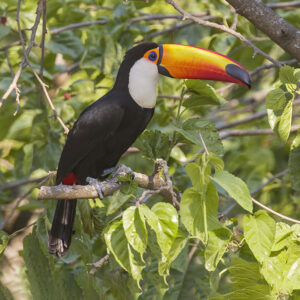
Perhaps the most iconic beak in the world belongs to the toco toucan. Despite its size, the bill is surprisingly light due to its hollow, honeycombed structure. It helps the toucan peel fruit, regulate body heat, and even scare off rivals. Brightly colored and hard to miss, this bill is both flashy and functional.
10. Keel-Billed Toucan
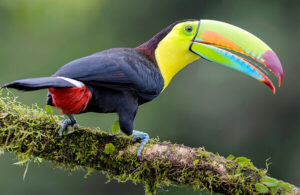
Nicknamed the rainbow-billed toucan, this bird is like a flying work of art. Its colorful bill, though large, is lightweight and multifunctional—used for feeding, dueling, and even social signaling. It thrives in the humid rainforests of Central and South America, where its bright beak cuts through the greenery.
11. American White Pelican
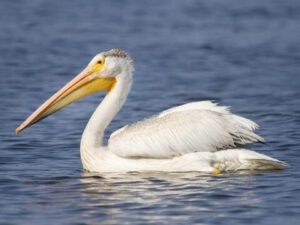
With its oversized pouch and “horn” on the upper mandible during breeding season, the American white pelican’s bill is a marvel of aquatic adaptation. Unlike its brown cousin, it hunts while floating, using its expandable throat sac to scoop fish and strain water. It’s the only pelican species that sprouts a temporary bill ornament for mating.
12. Flamingo
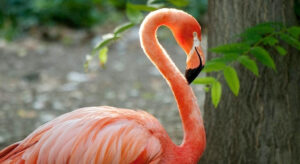
Famous for its vivid pink plumage, the flamingo also possesses a uniquely adapted beak that works upside down. Inside are comb-like lamellae that filter food—like algae, crustaceans, and insects—from muddy water. This filtration system is strikingly similar to the baleen of whales, allowing flamingos to thrive in nutrient-rich wetlands.
13. Kiwi
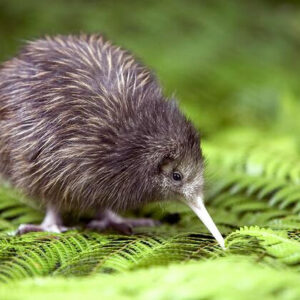
The kiwi has the only beak in the bird world with nostrils at the tip. It uses its exceptional sense of smell—second only to the condor’s among birds—to sniff out prey beneath the forest floor. As it walks, it probes the soil, listens, and sniffs for worms, then uses its bill like a lever to extract them from the ground.
14. Atlantic Puffin
The puffin’s vivid beak, striped with red and black, earns it nicknames like “sea parrot” and “clown of the sea.” But its most impressive feature is functional: grooves and serrations inside the bill allow it to grip and carry a dozen fish at once without dropping them. As puffins age, their beaks become more ornate and colorful.

15. American Avocet
Slender, curved, and delicately elegant, the avocet’s bill is made for shallow-water foraging. It swings its beak side to side like a scythe, filtering insects and crustaceans from the water. Despite its fragile look, this bird can be fiercely protective, diving at predators to defend its territory and young.