
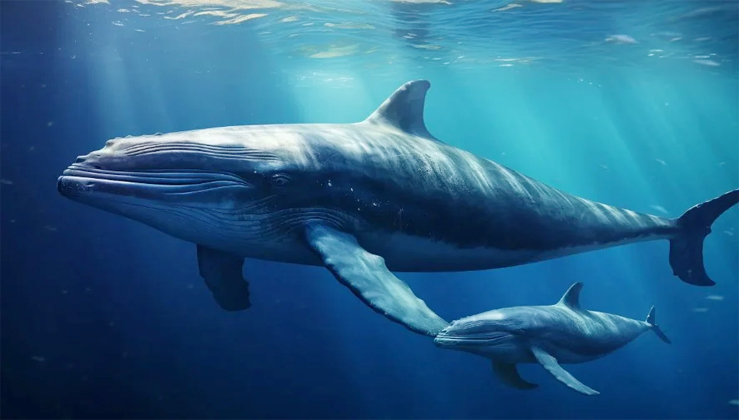
Discover 11 mind-blowing facts about blue whales—the largest animals to ever live on Earth. From their massive size to their powerful songs, learn what makes these endangered ocean giants so fascinating.
1. Blue Whales Are Longer Than Three School Buses
Reaching up to 100 feet (30 meters) in length, blue whales are the longest animals ever recorded. The largest verified individual was a female measuring 97 feet, though unconfirmed reports mention lengths of up to 108 feet. That’s equivalent to three school buses lined up in a row!
2. They Weigh More Than 30 Elephants
A blue whale can weigh up to 220 tons (200,000 kilograms)—roughly the same as 30 African elephants. Their immense weight includes everything from their thick blubber to their massive internal organs, making them the heaviest animals to ever live.
3. Their Hearts Are the Size of Golf Carts
The blue whale’s heart is the largest of any animal on Earth, weighing approximately 400 pounds (180 kilograms). It’s so big that a small child could crawl through its arteries. During deep dives, the heart slows dramatically—beating just two times per minute.
4. Even Their Tongues Are Colossal
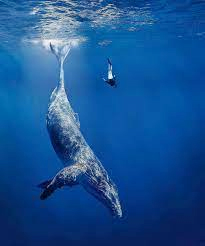
A single blue whale tongue can weigh as much as a full-grown elephant—roughly 3 tons (2,700 kilograms). Their enormous mouths are designed to gulp thousands of liters of seawater teeming with krill.
5. Their Calves Are Born Huge
Blue whale calves are the largest babies on Earth. At birth, they weigh about 8,800 pounds (4,000 kilograms) and measure around 26 feet (8 meters) long. Nursing calves can gain up to 200 pounds (90 kilograms) a day, fueled by rich, fatty milk.
6. They’re Louder Than a Jet Engine
Blue whales are the loudest animals on the planet. Their low-frequency vocalizations can hit up to 180 decibels—louder than a jet taking off—and can travel more than 1,000 miles (1,600 kilometers) underwater. These powerful sounds help them communicate across vast ocean distances.
7. Their Diet Centers Around Tiny Krill
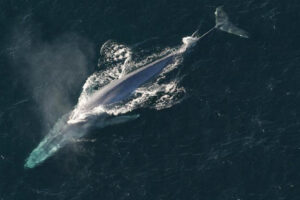
Despite their massive size, blue whales feed almost exclusively on krill. During feeding season, they can consume up to 9,000 pounds (4,000 kilograms) of these tiny crustaceans daily—roughly 40 million krill per day.
8. Blue Whales Can Move Surprisingly Fast
Though their usual cruising speed is around 5 miles per hour (8 kilometers per hour), blue whales can surge up to 20 mph (32 kph) in short bursts. They migrate vast distances between feeding grounds in polar regions and breeding areas near the equator.
9. They Live Long Lives
Blue whales can live for 80 to 90 years on average, and some may reach over 100 years. Scientists determine their age by counting layers in the earwax plugs of deceased whales—similar to counting tree rings.
10. Their Numbers Were Once Devastated by Whaling
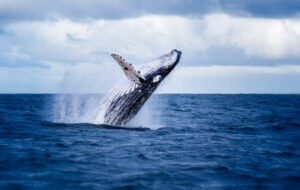
Blue whales were abundant before commercial whaling decimated their populations. Between 1904 and 1967, over 350,000 blue whales were killed in the Southern Hemisphere alone. A single year—1931—saw nearly 30,000 individuals slaughtered.
11. Blue Whales Are Still Endangered Today
Despite international protection since 1967, blue whale populations have recovered slowly. They still face threats from ship strikes, climate change, and ocean noise pollution. Today, their global population is estimated at just 10,000 to 25,000, with a small group of about 2,000 off the California coast.