Butterflies Show Surprising Spatial Learning Skills, Challenging Old Ideas About Insect Intelligence

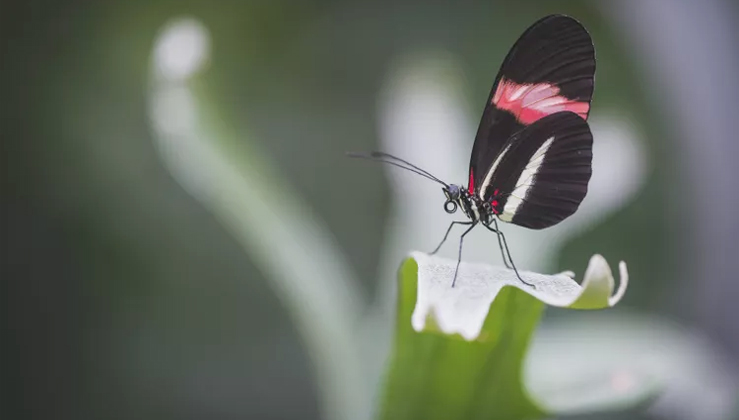
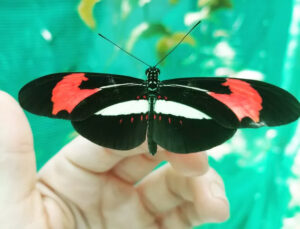
A new University of Bristol study reveals that Heliconius butterflies can master complex spatial tasks—evidence that advanced learning may be far more widespread among insects than once believed.
Butterflies Show Surprising Spatial Learning Skills
Rethinking Insect Intelligence
It’s easy to overlook the intelligence of small creatures with tiny brains. Yet biologists are increasingly recognizing that insects can handle complex information. The new Bristol study is the first to show experimentally that any butterfly or moth can use spatial learning—long documented in bees and ants but never proven in Lepidoptera.
First Experimental Evidence in Butterflies
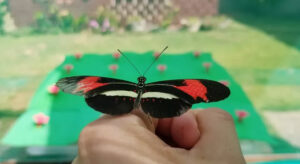
Lead author Dr. Stephen Montgomery from the University of Bristol’s School of Biological Sciences says the findings reveal “complex behaviours that even familiar animals like butterflies express as part of their natural ecologies.” With brains only a few millimetres wide, Heliconius butterflies are extracting and processing environmental information to perform advanced tasks.
Testing Spatial Memory Across Three Scales
Researchers designed three spatial learning experiments mimicking ecologically relevant behaviors:
Small scale: Inside a one-square-meter arena with 16 artificial flowers, butterflies learned which location offered a food reward—similar to foraging within a single patch.
Medium scale: In a three-square-meter, two-armed maze, the insects associated food with either the left or right side.
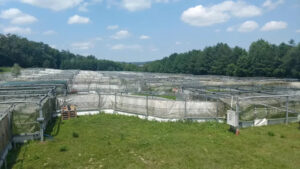
Large scale: In outdoor cages measuring 60 meters across, the butterflies navigated a giant T-maze to locate food sources.
Heliconius succeeded at all three tasks, demonstrating clear spatial learning ability.
Traplines: Efficient Foraging Routes
In the wild, Heliconius butterflies appear to memorize the location of reliable pollen sources and create long-term “traplines”—fixed foraging routes revisited over consecutive days. This efficient strategy is similar to that of orchid bees and bumblebees, yet it had never before been confirmed experimentally in butterflies.
Implications for Butterfly Cognition
The results suggest that Heliconius may be capable of learning spatial information at even larger scales. Researchers now plan to compare the butterflies’ performance with that of closely related, non-pollen-feeding species to understand how ecology shapes cognitive evolution.
“It’s been almost a century since the first anecdotal report on the spatial abilities of these butterflies,” notes co-lead author Dr. Priscila Moura of Universidade Federal do Rio Grande do Norte. “Now we’re providing hard evidence—and this is just the beginning.”
Next Steps: How Do Butterflies Navigate?
Future work will explore the sensory cues Heliconius uses to navigate. Panoramic visual landmarks are thought to play a major role, but the insects may also rely on the sun’s position or even a geomagnetic compass. Uncovering these mechanisms could illuminate how a brain only millimetres wide supports such impressive learning.
Publication Details
The study, titled “Rapid expansion and visual specialisation of learning and memory centers in the brains of Heliconiini butterflies,” appears in the journal Current Biology.