Discover eight of the world’s biggest and boldest flowers—from rainforest giants to aquatic marvels. These botanical wonders break records in size, scent, and spectacle.
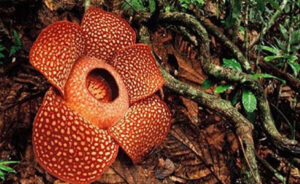
1. Rafflesia arnoldii – The Monster Flower
Rafflesia arnoldii boasts the largest individual flower bloom in the world. Native to the dense rainforests of Indonesia and Malaysia, it can reach an astonishing three feet across and weigh up to 15 pounds. Nicknamed the “monster flower,” its notoriety stems not just from its size but from its pungent odor—similar to rotting flesh. This scent attracts flies for pollination, earning it a shared nickname with another massive bloom: the “corpse flower.” Rafflesia parasitizes the Tetrastigma vine and only appears in pristine rainforest conditions, making it rare and increasingly endangered due to habitat loss.
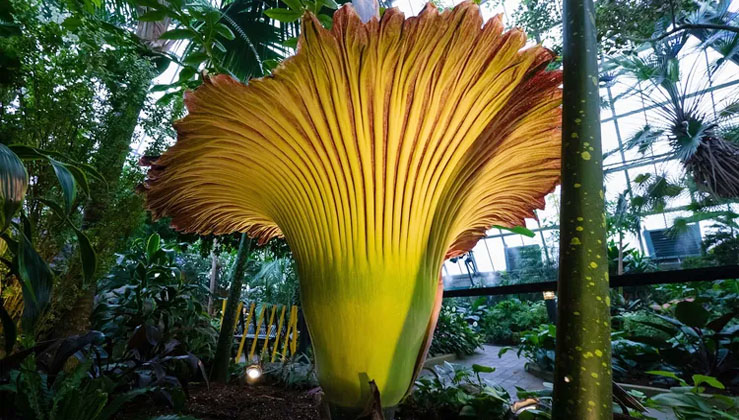
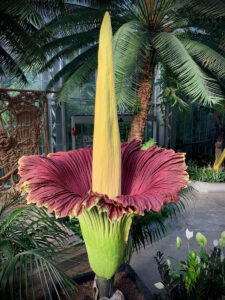
2. Amorphophallus titanum – The Corpse Flower
With a towering inflorescence that can exceed 10 feet, Amorphophallus titanum is a botanical giant in a different way. Unlike Rafflesia, its bloom consists of hundreds of small flowers clustered along a central stalk. Native to Sumatra, this titan emits a foul odor that mimics decomposing flesh, luring in carrion insects for pollination. It remains rare in the wild but occasionally blooms in botanical gardens worldwide, creating a media frenzy due to its enormous, stinky display.
What Is an Inflorescence?
An inflorescence is a group of flowers arranged on a stem or branch, often designed to attract pollinators more efficiently than a single bloom.
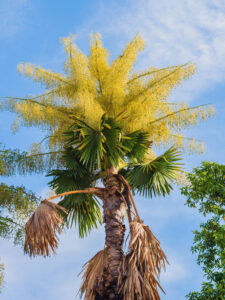
3. Corypha umbraculifera – The Talipot Palm
The Talipot palm (Corypha umbraculifera) is the world’s largest branched flowering plant, towering over 80 feet tall with a flowering structure that can extend 19 to 26 feet. Native to India and Sri Lanka, this palm blooms just once—usually after 80 years—and dies shortly after. The palm’s branched inflorescence resembles a golden fan, producing a spectacular burst of millions of small flowers, a rare and awe-inspiring sight in the tropics of Southeast Asia and beyond.
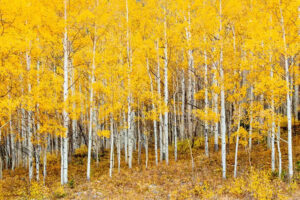
4. Pando – The Quaking Aspen Colony
Though its individual flowers are small and inconspicuous, the quaking aspen (Populus tremuloides) earns its place here due to scale. Pando, a clonal colony in Utah, consists of 47,000 genetically identical trees all connected by one massive root system. Covering 107 acres and weighing an estimated 13 million pounds, it is not only among the biggest flowering organisms but also one of the oldest—believed to be over 80,000 years old.
What Is a Clonal Colony?
A clonal colony is a group of genetically identical plants derived from a single ancestor that grows interconnectedly in one location.
5. Posidonia oceanica – Neptune Grass
Posidonia oceanica, a marine flowering plant found in the Mediterranean Sea, forms expansive underwater meadows that cover nearly 15,000 square miles. Though it resembles seaweed, it produces fruit and seeds like any terrestrial flowering plant. Some colonies are believed to be over 100,000 years old, making them the oldest and one of the largest living organisms. Posidonia plays a crucial ecological role, sequestering carbon dioxide and supporting marine biodiversity, though it’s currently threatened by climate change.

6. Helianthus annuus – The Sunflower
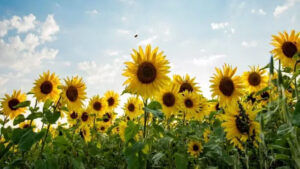
The sunflower may be a common sight, but its grandeur is anything but ordinary. These bright blooms—native to the Americas—can grow up to 30 feet tall, with flower heads exceeding a foot in diameter. Each “flower” is actually an inflorescence composed of thousands of tiny flowers, making it a composite powerhouse of pollination. Sunflowers have been cultivated for thousands of years for their seeds and oil, and they continue to tower over gardens across the world.
7. Puya raimondii – Queen of the Andes
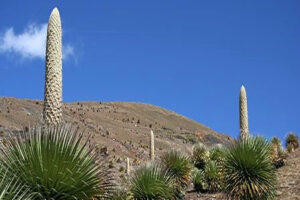
Puya raimondii, the largest member of the bromeliad family, is a floral monarch native to the high Andes of Peru and Bolivia. Its flowering stalk can shoot up 30 feet and display thousands of blossoms—but only after reaching an age of 80 to 100 years. Tragically, like many bromeliads, the plant dies after blooming. With an endangered status due to habitat threats and climate change, this towering bloom is as rare as it is breathtaking.
8. Victoria amazonica – The Amazon Water Lily
The Amazon water lily (Victoria amazonica) is a floating marvel native to South America. Its lily pads can grow up to eight feet in diameter and hold the weight of a small child (around 65 pounds). The plant’s structure includes spiny undersides that fend off predators and crush nearby competitors. Its striking white flowers smell like pineapple and bloom only at night, making their appearance a magical, short-lived spectacle.