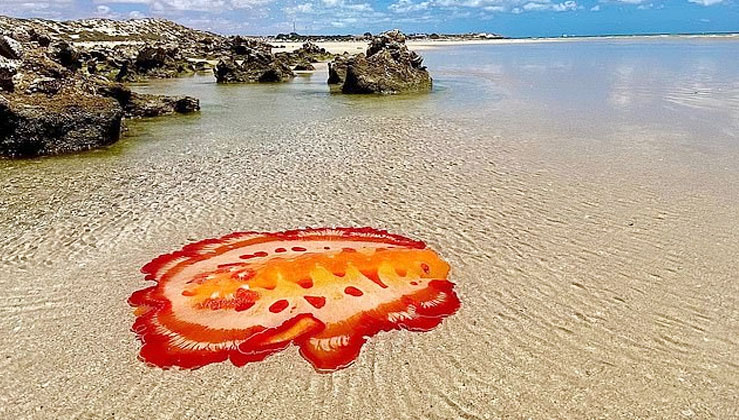
A dazzling sea slug known as the Spanish dancer was spotted near Coral Bay, Western Australia, captivating onlookers with its flamenco-like movements and vibrant colors.
A spectacular marine creature has captivated nature lovers after being spotted off the coast of Western Australia. Nicknamed the “Spanish dancer” for its flamboyant movements and vivid colors, this eye-catching creature isn’t a dancer at all — it’s a sea slug known scientifically as Hexabranchus sanguineus. Recently observed drifting gracefully through the waters of Coral Bay, approximately 1,200 kilometers north of Perth, the Spanish dancer left observers mesmerized with its flowing, flamenco-skirt-like mantle in brilliant shades of red and orange.
The Spanish dancer is a species of large, soft-bodied nudibranch — a type of sea slug — and gets its name from the undulating swimming motion it performs when threatened, which closely mimics a flamenco dancer’s whirling skirt. Its scientific name, Hexabranchus sanguineus, roughly translates to “blood-colored six-gills,” referencing both its color and its gill structure. Marine biologists and enthusiasts alike took to social media to marvel at the recent sighting.
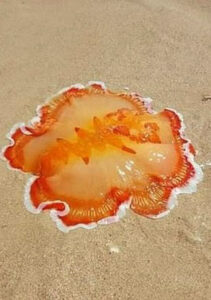
Others contributed their own past encounters with this mesmerizing mollusk, all echoing the same sentiment: awe and admiration for the vibrant reef resident. The Atlas of Living Australia describes this nudibranch as having a soft, flattened body capable of growing up to 90 cm in length, though they are more commonly found between 20 and 30 cm. The dorsal side features retractable rhinophores, and the rear end displays six gills that can contract independently.
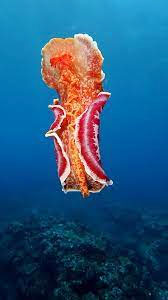
What makes the Spanish dancer truly unique is its defense mechanism. When disturbed, it uncurls its mantle and propels itself through the water using rhythmic body undulations — a mesmerizing spectacle that earned it its theatrical nickname. These fascinating sea slugs are typically found across the Indo-Pacific region, including Australia, Japan, Hawaii, and parts of eastern Africa. They favor rocky and coral reef environments, where they glide or dance in search of food and mates.