The once-extinct takahē bird has made a remarkable comeback in New Zealand, with new releases into the wild marking a historic milestone in conservation.
In what is being hailed as a landmark achievement in wildlife conservation, New Zealand has reintroduced eighteen takahē birds into the wild near Lake Wakatipu, breathing new life into a species that was once thought to be lost forever. This release marks a significant step in establishing a third wild breeding population of this rare and iridescent flightless bird.Once considered extinct—declared so in the late 19th century when cars were still a novelty in London—the takahē’s disappearance was largely attributed to the introduction of non-native mammalian predators to New Zealand’s ecosystems.
Having evolved in an isolated environment free of such threats, the takahē was defenseless against stoats, rats, and ferrets, which decimated its numbers.
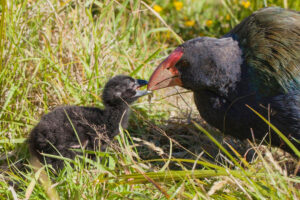
That is, until a startling rediscovery in 1948, which changed the course of history for this remarkable species. Since then, conservationists have been waging a determined and creative campaign to protect and revive takahē populations.One of the most unusual techniques involved hand-rearing chicks using sock puppets shaped like adult takahē heads to prevent the young birds from imprinting on humans. Over time, this evolved into controlled breeding programs with predator-free sanctuaries and specialized enclosures.
To combat the predation problem, intensive trapping of invasive species has been a cornerstone of the conservation strategy. These efforts, along with habitat protection and careful breeding, have resulted in a steady population growth of around 8% annually.
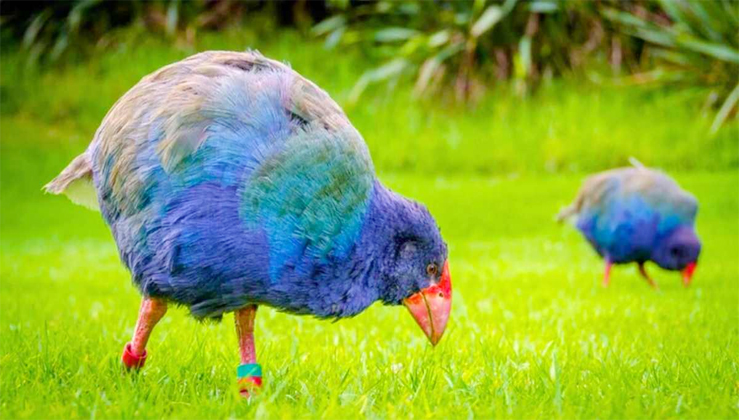
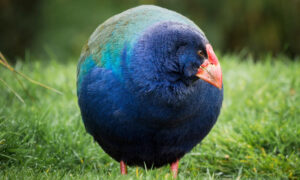
The latest release at Lake Wakatipu, the South Island’s longest lake stretching over 50 miles through the Waimāori Valley, brings hope and heritage together. Surrounded by dramatic alpine landscapes, the lake provides an ideal habitat for the takahē, which stands roughly one and a half feet tall, with striking blue and green plumage and vivid orange legs and beak.“They look like something from another age,” says Tūmai Cassidy, a representative of the Ngāi Tahu iwi, the indigenous stewards of the land.“From the front, they’re almost perfectly round—like a small globe walking on stilts.”
For the Māori, the return of the takahē is more than an ecological victory; it is a deeply spiritual one. Historically, takahē feathers were woven into cloaks, and the echo of their calls through the valleys was part of the natural rhythm of life. Now, after decades of silence, that chorus may once again rise through the hills, a song of survival, resilience, and renewal.
With more birds set to be released later this year and into the next, New Zealand’s takahē recovery efforts stand as one of the most extraordinary examples of reversing extinction in modern history.