Meet the strange and spectacular creatures that inhabit the darkest depths of the ocean. From glowing anglerfish to ghostly jellyfish, these deep-sea animals have evolved fascinating adaptations to survive where sunlight never reaches.
1. Anglerfish
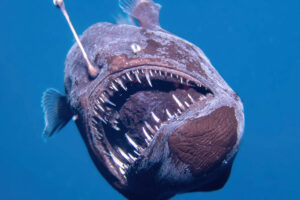
Dwelling up to a mile deep in the Atlantic and Antarctic Oceans, anglerfish are the classic face of the deep sea—large-headed, sharp-toothed, and fearsome. Over 200 species exist, most about a foot long, though some grow up to 3 feet. The females sport a bioluminescent lure dangling from their spine, used to attract prey in the darkness. These lures contain glowing bacteria and mimic the movements of smaller fish—an evolutionary fishing pole in action.
2. Chambered Nautilus
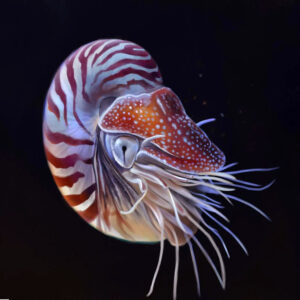
This ancient marine cephalopod, found in the deep waters of the Western Pacific and Indian Oceans, spends daylight hours as deep as 2,000 feet. With no lens in its primitive eyes and up to 90 tentacles housed in its coiled, striped shell, the nautilus navigates and floats by regulating gases in its internal chambers. A living fossil, the nautilus has changed little over hundreds of millions of years.
3. Whiplash Squid
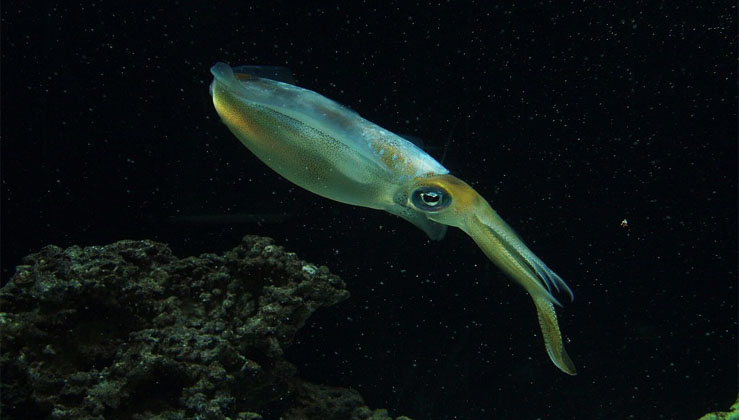
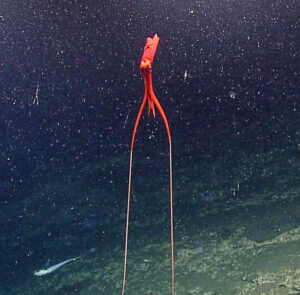
Whiplash squids hover in a vertical, tuning-fork-like posture at depths nearing 5,000 feet. Their slender bodies use fin-based locomotion, and some species feature glowing photophores around their eyes and mantles. Rarely observed until the 1990s, their presence is now better documented thanks to advanced remote-operated vehicles.
4. Mariana Hadal Snailfish
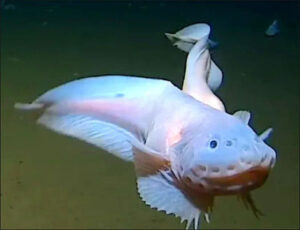
Living more than 26,800 feet down in the Mariana Trench, the Mariana snailfish holds the record for the deepest fish ever observed. These soft-bodied predators look unassuming, resembling oversized tadpoles, but are perfectly adapted for the crushing pressures of the hadal zone. Their bodies feature flexible cartilage and oversized organs to help them survive conditions that would destroy other species.
5. Common Fangtooth
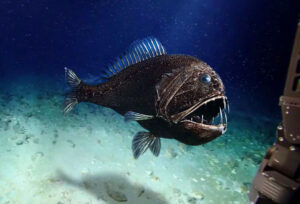
Despite its terrifying appearance, the fangtooth is only about 7 inches long. With oversized teeth so long they can’t close their mouths, these predators inhabit waters up to 16,000 feet deep. Found in tropical to subarctic regions, fangtooths either hunt their prey or ambush them, swallowing victims whole with a dramatic bite.
6. Cookiecutter Shark
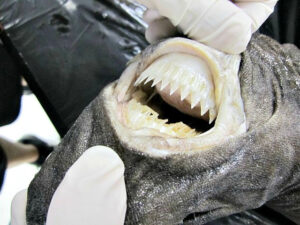
This parasitic predator lives around 1,000 feet deep in tropical waters and gets its name from the perfectly circular wounds it inflicts on larger animals. These 19-inch sharks have cigar-shaped bodies and bioluminescent organs to camouflage themselves from both prey and predators. The dark collar around their neck may mimic smaller fish, luring in victims.
7. Viperfish
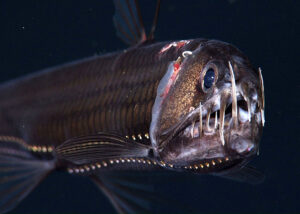
Known for its gaping jaw and fanged teeth, the viperfish dwells in tropical and temperate oceans at depths of up to 9,000 feet. It uses bioluminescent organs to lure in prey and can strike with speed to impale victims on its teeth. These foot-long fish range in color from green to silver to black.
8. Frilled Shark
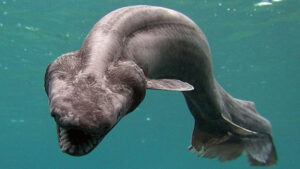
This serpentine shark lives between 1,600 and 3,300 feet deep and is believed to be one inspiration for old sea monster myths. It has over 300 needle-like teeth arranged in 25 rows and grows up to 6 feet long. Little is known about its feeding habits—no one has ever filmed a frilled shark eating.
9. Lanternfish
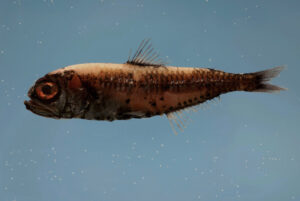
Tiny but vital to the marine ecosystem, lanternfish inhabit depths of 1,300 to 3,000 feet during the day, rising to near-surface waters at night. Measuring only 1 to 6 inches long, they produce light via photophores and are a critical food source for whales, squid, and seabirds. Unfortunately, they often consume plastic, spreading it through the food chain.
10. Giant Spider Crab
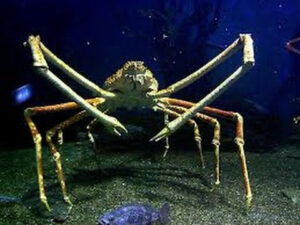
Found at depths of 500 to 1,000 feet near Japan, this crustacean is the world’s largest crab. It can reach a leg span of 12 feet and live up to 100 years. While they eat anything they can find, their youth makes them vulnerable—juveniles often decorate themselves with kelp and sponge for camouflage.
11. Northern Wolffish
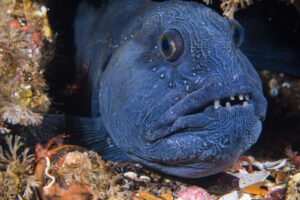
This powerful predator inhabits the icy waters of the North Atlantic, from 328 to over 5,500 feet deep. Its antifreeze-like blood, crushing jaws, and sharp teeth make it ideal for consuming shelled prey. It can grow up to 5 feet long and prefers rocky sea floors where it can hide and ambush prey.
12. Bluntnose Sixgill Shark
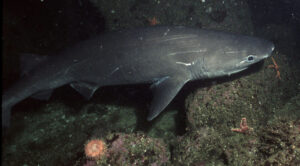
With prehistoric features and luminescent eyes, the sixgill shark swims at depths up to 6,500 feet. Reaching lengths of 16 feet, it preys on everything from cod to dolphins. A fascinating adaptation, its pineal window—a light-sensitive patch between its eyes—helps detect dim light in the deep.
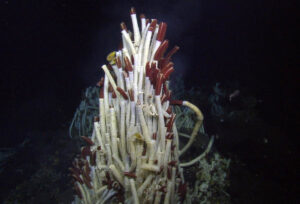
13. Giant Tube Worms
Growing up to 8 feet long, these bright red and white tube worms cluster around hydrothermal vents over a mile below the surface. They survive extreme heat and toxins through a symbiotic relationship with bacteria inside them. First discovered in 1977, they thrive in areas once thought uninhabitable.
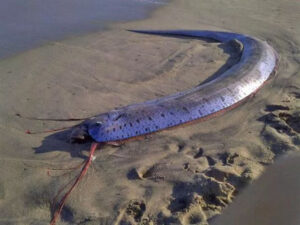
14. Oarfish
Often mistaken for sea serpents, these ribbon-like fish grow up to 56 feet long and live at depths reaching 3,280 feet. Their shimmering, scaleless bodies are covered with guanine, and their appearances near the surface are considered rare. Despite their size, their flesh is gelatinous and not commercially valuable.
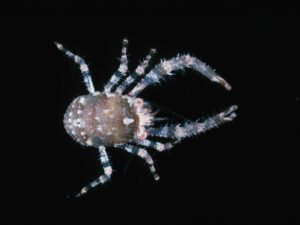
15. Squat Lobsters
Despite their name, squat lobsters are more closely related to hermit crabs. Living as deep as 8,579 feet, they hide in rock crevices rather than wearing protective shells. These scavengers feed on everything from sunken wood to whale bones and have long claws that stretch far beyond their small bodies.
16. Dinner Plate Jellyfish
This jellyfish, found between 2,300 and 3,300 feet deep, actively hunts for food rather than passively drifting. Found by the Okeanos Explorer near Hawaii, its discovery and that of many other unusual jellyfish added significantly to our understanding of deep-sea cnidarians. It’s named for its flat, round shape and ghostly appearance.