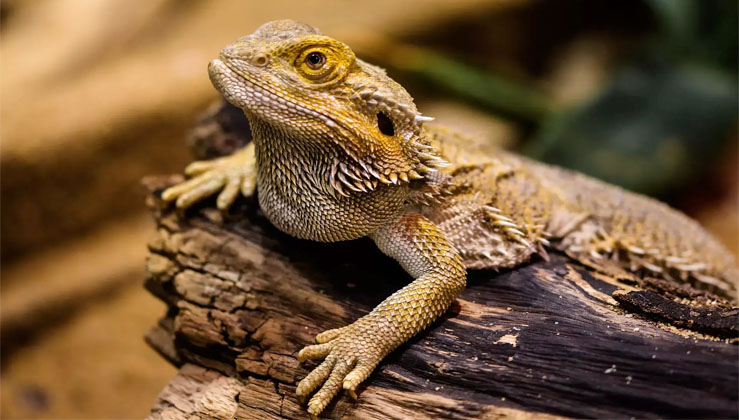
Bearded dragons are more than just calm, friendly reptiles. From their ability to climb trees and change color to peeing powder and even switching sexes, these Australian lizards have some truly astonishing quirks.
1. Expert Tree Climbers Despite Being Ground-Dwellers
Although bearded dragons spend much of their time on the ground, they’re actually semi-arboreal. In the wild, they’ll scramble up tree trunks or shrubs to escape predators, bask in better sunlight, or gain dominance over rivals by perching higher.
2. Mood Beards That Turn Black
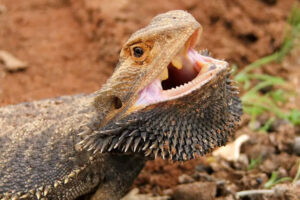
A bearded dragon’s signature “beard” works almost like a reptilian mood ring. When stressed, threatened, or excited, the pouch beneath its chin darkens—sometimes to jet black—and the lizard puffs up to look larger. When calm, the beard lies flat and blends with the rest of the body.
3. Bound by Law to Australia
Since the 1960s, Australia has banned the export of its native wildlife, including bearded dragons. The lizards kept worldwide today descend from individuals smuggled out between the 1970s and 1990s for captive breeding. They’re now common pets globally—except in places like Hawaii, where they’re banned to protect local ecosystems.
4. A Rare Mix of Tooth Types
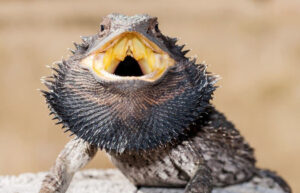
Bearded dragons can regenerate some, but not all, of their teeth. They have both polyphyodont (regrowing) and monophyodont (non-regrowing) teeth on the same jawline. If a regrowing tooth falls out, a replacement will emerge; if a non-regrowing tooth is lost, it’s gone permanently.
5. Rain Collectors of the Outback
These lizards have evolved an ingenious way to hydrate in their dry native habitat. During rare rains, a bearded dragon will tilt its head downward, letting water run along its scales toward its mouth—lapping it up for 20 to 30 minutes.
6. Females Store Sperm for Later Use
A single mating can yield multiple clutches. Female bearded dragons can store sperm in their reproductive tracts and later fertilize eggs within the same breeding season, producing 11 to 30 eggs per clutch while avoiding repeated, often aggressive, mating.
7. A Reptilian Language of Nods and Waves
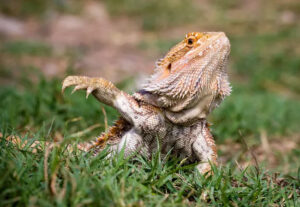
Bearded dragons communicate with body language. Gentle arm waves usually signal submission, while rapid head bobs are displays of dominance or mating readiness. Keepers often report their beardies “waving” at them, though experts caution it may also indicate stress.
8. Color Shifters With a Purpose
Though less dramatic than a chameleon’s, bearded dragon color changes are highly functional. They can alter specific body regions: neck color often shifts during social interactions, while back color changes help with temperature regulation—lightening to reflect heat or darkening to absorb warmth.
9. Vertical Sleepers

Owners frequently discover their pet dragons snoozing upright against tank walls or décor. This odd sleeping posture also occurs in the wild, possibly against trees. While unexplained, it appears harmless.
10. Surprisingly Fast Runners
When motivated, a bearded dragon can sprint up to 9 mph—similar to an average human jogging pace. In bursts of speed, they sometimes run bipedally, lifting their front legs off the ground for better balance.
11. Heat Can Flip Their Sex
High incubation temperatures (about 96.8°F/36°C or above) can cause genetically male embryos to develop as females. Intriguingly, these “sex-reversed” females may lay twice as many eggs as typical females, raising concerns about how climate change could affect wild populations.
12. Solitary by Nature
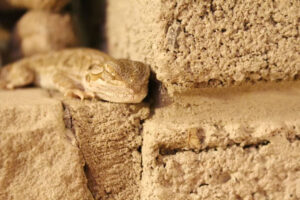
Despite their friendly appearance, bearded dragons are solitary animals. In the wild, a territory may host one male and several females, but in captivity they do best when housed alone to prevent stress or aggression.
13. They Pee Powder Instead of Liquid
To conserve water in their arid environment, bearded dragons excrete nitrogenous waste as a white chalky paste called “urate” rather than liquid urine. This adaptation helps them stay hydrated and is passed through the same cloaca used for defecation.
14. Winter Brumation
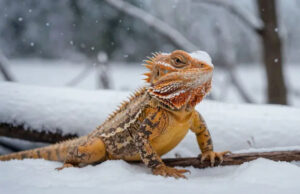
Bearded dragons undergo brumation, a reptilian version of hibernation, for several weeks or months. In Australia’s winter (around June) or the Northern Hemisphere’s fall (around November), beardies become sluggish, eat less, and sleep deeply while their metabolism slows dramatically.
15. Carriers of Salmonella
Like many reptiles, bearded dragons can harbor Salmonella bacteria. Handling them or their enclosures without proper hygiene can transmit the bacteria to humans. The CDC regularly tracks salmonella outbreaks linked to reptiles, with bearded dragons cited in multiple cases.