Discover the giant golden-crowned flying fox — a real-life megabat with a nearly 6-foot wingspan, golden fur, and a mysterious forest-dwelling lifestyle.
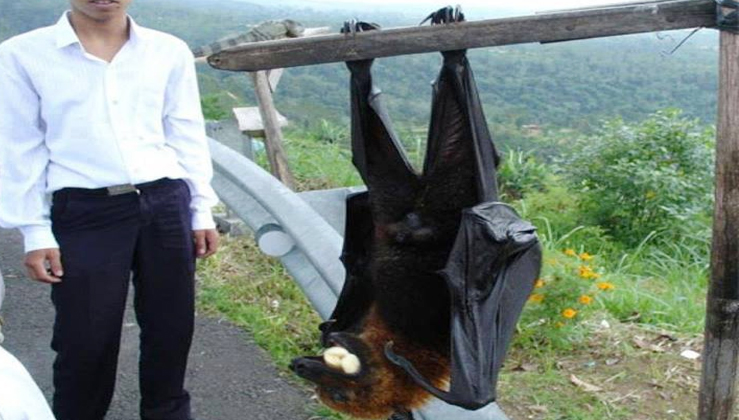
When you first see a photo of the Giant Golden-crowned Flying Fox, you might think it’s the result of Photoshop magic. With wings stretching nearly six feet and a dramatic black-and-gold coloration, it looks like something out of a fantasy film. But it’s entirely real — and even more impressive up close.
Native to the Philippines, this extraordinary megabat (scientific name: Acerodon jubatus) is one of the largest bat species on Earth. With a wingspan of 1.5 to 1.7 meters (4 feet 10 inches to 5 feet 7 inches) and weighing between 0.7 and 1.2 kilograms (1.5 to 2.6 pounds), it’s among the heaviest and widest-winged bats known. Its golden-crowned head stands out dramatically against its dark, cloaked body — a natural aesthetic that gives it the look of a caped vampire from folklore.
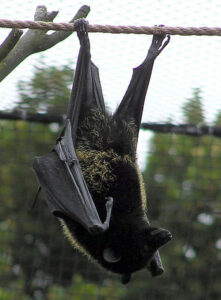
Despite its intimidating size, the golden-crowned flying fox is harmless. Like all fruit bats, it feeds exclusively on fruit, with a strong preference for wild figs. These bats can travel over 25 miles (40 kilometers) in a single night in search of food. When roosting, they wrap their long wings around themselves like a dark shroud, often appearing like hanging cloaks in the forest canopy.Because they dwell in remote forested regions, mostly at elevations from sea level to 1,100 meters (3,600 feet), much of their behavior remains mysterious. Studies confirm they are forest obligate species — they avoid urban areas and human activity entirely. In fact, a 2005 study found no individuals in inhabited zones, underlining their preference for undisturbed environments.
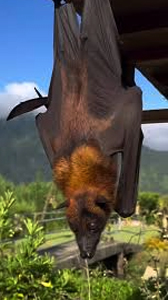
Unfortunately, these gentle giants are increasingly threatened by deforestation and illegal hunting. Thankfully, several conservation efforts are underway. Maitum in Sarangani Province has initiated local campaigns to protect the species, while Subic Bay — a designated 14,000-acre (57 km²) conservation area — serves as a hub for research and monitoring.International organizations like Bat Conservation International, Wildlife Conservation Society, World Wildlife Fund, and Lubee Foundation are investing in education and research to secure a future for this species. Their efforts include habitat preservation, field studies, and community outreach.
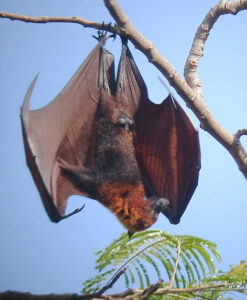
Interestingly, while most bats use echolocation to navigate, megabats do not — with the exception of one species, the Egyptian fruit bat (Rousettus egyptiacus). Instead, megabats rely on their keen eyesight and strong sense of smell. Scientists believe echolocation was lost in megabats due to energetic limitations associated with their larger body size. Since flight and echolocation are both metabolically demanding, the two processes couldn’t remain coupled as megabats evolved.These giants may seem like mythical beasts, but they are very real — and in need of our protection. Spread the word, support conservation, and help preserve one of Earth’s most fascinating and misunderstood creatures.