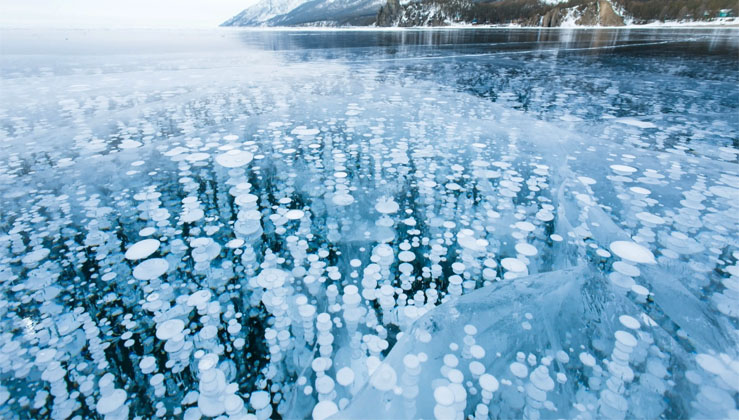
Lake Baikal in Siberia is the world’s deepest, oldest, and most transparent lake. In winter, its frozen surface becomes a surreal landscape of cracks, bubbles, and crystal-clear ice that attracts adventurers and photographers from around the world.
Lake Baikal is nothing short of breathtaking. Stretching across southern Siberia for nearly 600 kilometers, it is the deepest and oldest freshwater lake on Earth, with an astounding depth of 1,642 meters and an age estimated at over 25 million years. Scientists continue to debate its exact origins, but one thing is clear: Baikal is unmatched in its natural grandeur. During the coldest months of winter, the lake freezes over with ice so clear and pristine that you can often see all the way to the bottom. In some places, the water’s clarity allows visibility down to 40 meters.
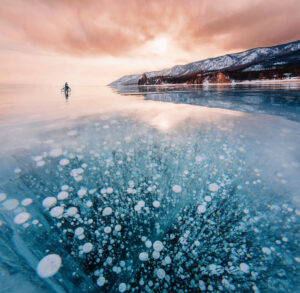
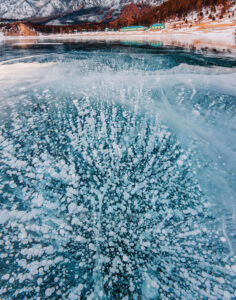
The ice reaches a thickness of 1.5 to 2 meters, strong enough to support vehicles up to 15 tonnes—although some unfortunate drivers have misjudged its strength in warming months. Each section of the frozen lake tells a different story. The ice forms unique patterns depending on how water freezes in layers. Travelers often find captivating scenes beneath their feet: trapped air bubbles, suspended branches, and even fish encased in crystal-clear ice. Methane gas released by underwater algae forms frozen bubbles, adding to the lake’s surreal visual spectacle.
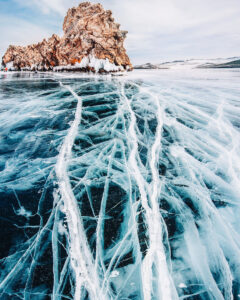
Cracks, like thunderous fault lines across the ice, can stretch for 10 to 30 kilometers and echo like gunshots. These dramatic fractures help oxygen circulate through the water, allowing Baikal’s unique ecosystem to thrive even under thick ice. Baikal’s surface becomes a playground for adventurers. Skaters glide over glassy patches. Cyclists and hikers journey across the lake, some traveling hundreds of kilometers and sleeping in tents pitched right on the frozen surface. In early spring, despite the lingering ice, driving on the lake becomes too risky—but the ice remains stunning well into May.
Culturally, Baikal is steeped in Siberian legend. According to folklore, the lake’s 336 tributary rivers are its “sons,” and only one river—the Angara—is its “daughter,” who flows away from her father to join her love, the Yenisei River. In anger, Baikal hurled a massive stone after her, now known as Shaman Rock, marking the source of the Angara River. A visit to Lake Baikal in winter is more than a journey—it’s a sensory experience of shimmering light, cracking ice, and ancient legend. It’s a place where science, history, and myth intersect on a frozen stage that defies time.