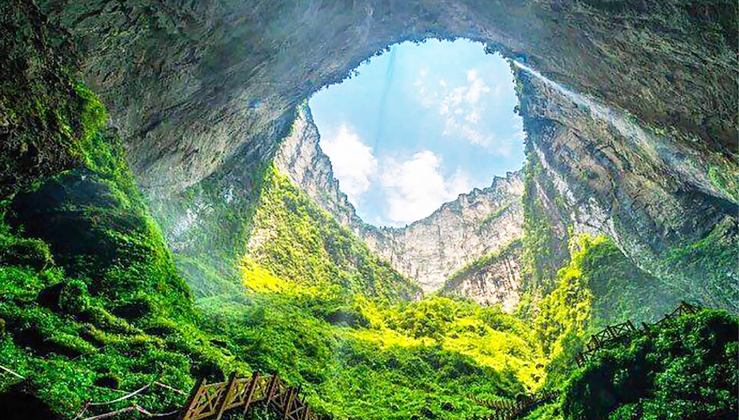
Venture into Xiaozhai Tiankeng—China’s “Heavenly Pit”—the world’s deepest sinkhole. Explore its staggering depth, unique ecosystem, and awe-inspiring geology.
China’s Hidden Giant
Although locals were aware of the sinkhole for centuries, Xiaozhai Tiankeng remained virtually unknown to the outside world until 1994, when a British expedition documented its staggering depth and vertical cliffs. Since then, it has drawn geologists, adventurers, and nature lovers eager to see one of Earth’s most dramatic natural formations.
How the Heavenly Pit Was Born
Xiaozhai Tiankeng took shape through karst processes—underground rivers slowly dissolving the surrounding limestone until the ceiling collapsed, leaving an immense open pit. The result is a nearly sheer drop that continues to evolve today, with a river still flowing at its base, quietly deepening the chasm.
A World Apart: Microclimate and Biodiversity
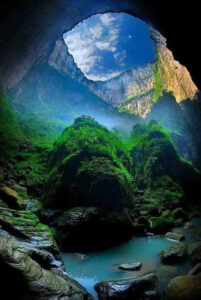
Far more than a gaping hole, the Heavenly Pit contains its own microclimate with cooler temperatures, mist, and high humidity. This hidden environment supports at least 1,285 plant species, including ancient ginkgo trees, and rare animals such as the clouded leopard and the Chinese giant salamander. Because of the sinkhole’s isolation, many of these species may be unique to this subterranean refuge, offering scientists the possibility of discovering life forms unknown elsewhere.
A Descent Into the Depths
Reaching the bottom of Xiaozhai Tiankeng is a serious undertaking. The descent can take four hours or more over steep, uneven paths. Climbing back out is equally demanding, requiring stamina, planning, and the right equipment. To ease the journey, a 2,800-step staircase winds its way into the pit, allowing determined hikers a chance to experience its depths more safely.
Immense Scale Beyond Imagination
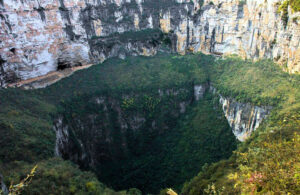
The dimensions of Xiaozhai Tiankeng defy comparison. Imagine the Empire State Building lowered into the chasm with room to spare, and you’ll have a sense of its size. Its vertical walls, overhanging cliffs, and lush interior create an otherworldly scene more reminiscent of science fiction than reality.
A Living Laboratory for Scientists
Because its environment has remained relatively undisturbed, the Heavenly Pit serves as a natural laboratory for studying biodiversity, climate variation, and karst geology. Each new expedition uncovers more about how such sinkholes form and what they can tell us about Earth’s hidden systems.
See It for Yourself
For a visual journey into Xiaozhai Tiankeng, BBC Reel and other documentaries offer glimpses of its misty depths, strange flora, and dramatic cliffs. Even from the rim, the view into this natural abyss is unforgettable.