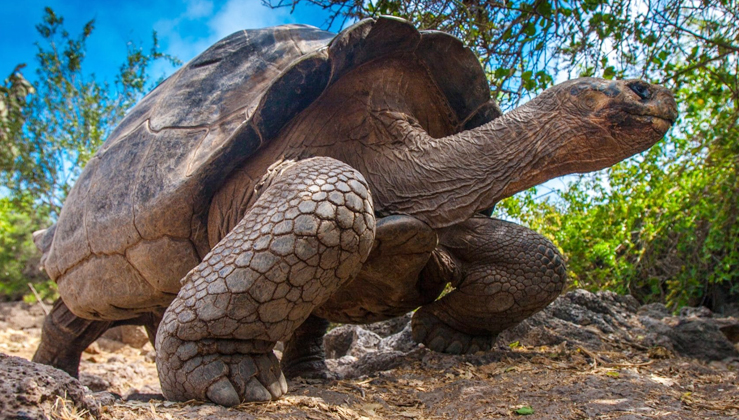
A Galapagos tortoise species thought to be extinct for more than a century has been rediscovered alive on Fernandina Island, reigniting global hope for endangered species conservation.
Rare Giant Tortoise Believed Extinct for a Century Rediscovered on Galapagos Island
In an astonishing turn of events, a species of giant tortoise presumed extinct for over a hundred years has been found alive on Fernandina Island, part of Ecuador’s Galapagos archipelago. The discovery of a living adult female Fernandina Giant Tortoise has reignited global hope for endangered wildlife. Ecuador’s Environment Minister, Marcelo Mata, confirmed the find, which took place during an expedition sponsored by Animal Planet for its upcoming series Extinct or Alive. Historically, giant tortoises across the Galapagos Islands suffered immense population losses due to overhunting by European colonists who exploited them for food during their maritime journeys.
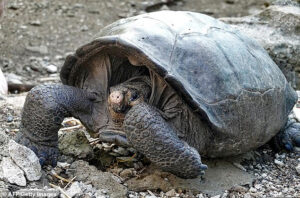
Of the 14 known giant tortoise species native to the Galapagos, only ten are confirmed to have survived the era of human colonization.This recent expedition, led by biologist and conservationist Forrest Galante, involved crossing miles of treacherous lava terrain on Fernandina Island—one of the youngest and most volcanically active islands in the region. The female tortoise was discovered concealed beneath thick brush. “This is the greatest scientific achievement of my life,” Galante stated. “Much like Lonesome George symbolized extinction, this tortoise can represent a beacon of hope. She may be the rarest living tortoise—perhaps even the rarest animal—in the world today.”The discovery was made jointly by the Galapagos National Park team and the US-based NGO, Galapagos Conservancy.
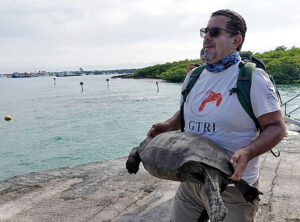
The female tortoise, described as having a large frame, a smooth shell, and a pinkish head, is the first confirmed member of her species seen since a single specimen was collected in 1906.The greatest existential threat facing her species is the persistent volcanic activity on Fernandina Island.Global President of Animal Planet, Susanna Dinnage, praised the momentous find: “This rediscovery offers renewed hope in the conservation field. As extinction rates continue to alarm conservationists, this finding proves that resilience and survival are still possible.” Mr. Mata shared a photo of the tortoise via Twitter, underscoring the rarity and importance of the find. Experts from the Galapagos Conservancy noted that while volcanic eruptions likely decimated the tortoise population, there have been ongoing anecdotal reports and scat findings suggesting the possible presence of more individuals.
Previously listed by the IUCN as “Critically Endangered (Possibly Extinct),” the Fernandina Giant Tortoise may now warrant reclassification, pending further study. The IUCN emphasized that while this sighting is extraordinary, additional surveys are essential to verify the continued existence of other individuals. In a related development in 2015, Ecuador unveiled the discovery of a new tortoise species, Chelonoidis donfaustoi, on Santa Cruz Island. The species was named in honor of Fausto Llerena, the caretaker of the late “Lonesome George,” a Pinta Island tortoise and the last known member of his species, who died in 2012.
Giant tortoises are believed to have reached the Galapagos Islands 2–3 million years ago, floating on natural rafts of vegetation from South America. Charles Darwin famously studied the islands’ unique wildlife during his five-week visit, forming key observations that contributed to his theory of evolution by natural selection.