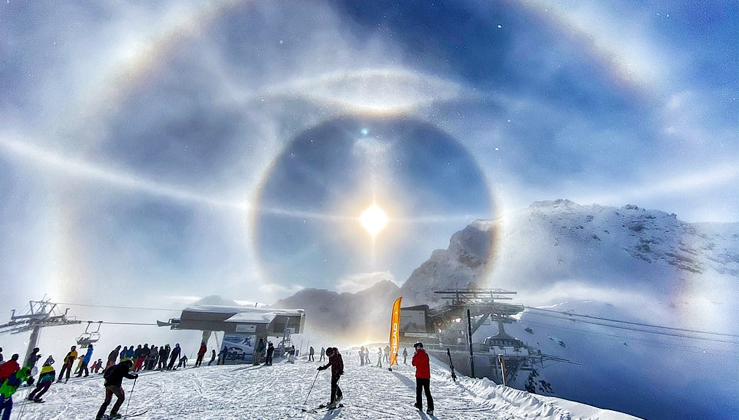
Storm chaser Wouter van Bernebeek captured rare and mesmerizing atmospheric optical phenomena—including halos and sun dogs—in Germany’s icy Sauerland region.
Storm Chaser Captures Stunning Atmospheric Phenomena on Frozen German Peak
A stunning display of atmospheric optics was captured in the snow-covered Sauerland region of Germany, where a storm chaser experienced what he calls some of the most beautiful winter conditions he’s ever seen.
“This might have been one of the prettiest winter pictures I’ve ever taken,” said Wouter van Bernebeek, a storm chaser from the Netherlands, in a Facebook post dated December 11, 2022. His breathtaking photo showcased a winter landscape blanketed in ice and sparkling snow, along with several rare optical effects caused by the interaction of sunlight and ice crystals in the air.
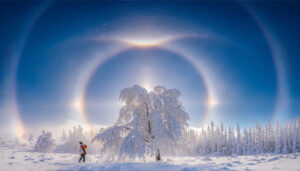
Among the phenomena visible were a 46-degree halo, a classic 22-degree halo with parhelia—commonly known as sun dogs—and a brilliant upper tangent arc. These optical marvels form when sunlight passes through suspended ice crystals, typically in very cold conditions.
On that day, temperatures in Sauerland ranged from 5°F to 14°F (-15°C to -10°C), ideal conditions for such formations. Van Bernebeek noted the presence of frozen fog clinging to trees and ice needles or “diamond dust” floating in the air. He also shared additional mesmerizing photos and videos on his YouTube channel.
Although Sauerland is a well-known tourist region in Germany, it remains sparsely populated, making it a serene destination. The area boasts over 19,000 miles (30,000 km) of hiking trails and numerous resorts, making it a year-round attraction for nature enthusiasts and adventurers alike.