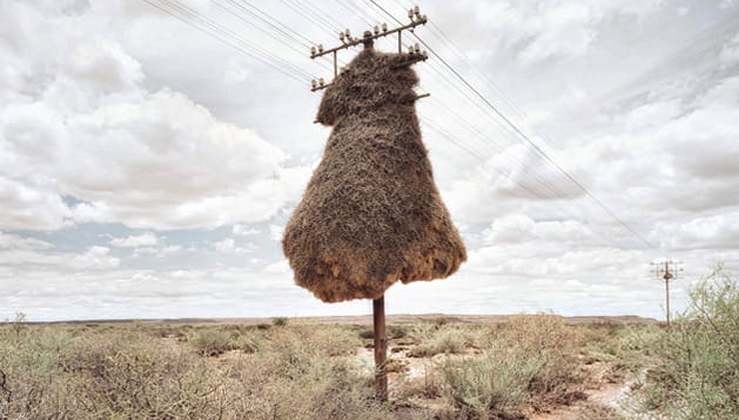
In the Kalahari Desert, massive communal nests built by Sociable Weaver Birds provide shelter not just for their own colonies but also for several other bird species, creating a unique avian neighborhood high above the ground.
Giant Communal Bird Nests in Southern Africa Double as Avian Apartment Complexes
No, those aren’t hay bales hanging off telephone poles—those enormous bundles of twigs and grass are actually elaborate bird nests built by the Sociable Weaver Bird, a remarkable species native to the Kalahari Desert in Southern Africa. True to their name, Sociable Weavers are highly communal creatures, not only living together in large colonies but also constructing colossal shared nests from sticks, dry grass, and other natural materials.

These nests can be seen perched high on trees or even on utility poles, and they often house more than 100 individual birds. Even more fascinating, these gigantic structures aren’t exclusive to Sociable Weavers. A variety of other bird species, such as the South African pygmy falcon, take up residence in the same nests. The pygmy falcon, Polihierax semitorquatus, is particularly reliant on the weaver’s nest, nesting exclusively within these communities. Other bird guests include the pied barbet, red-headed finch, rosy-faced lovebird, familiar chat, and ashy tit—all of which enjoy the safety and comfort of the cozy nesting chambers. Birds of prey like eagles, vultures, and owls even use the wide, flat tops of these nests as roosting spots.

Why do Sociable Weavers share their meticulously built homes? The benefits of community living are clear: more birds mean more eyes to spot predators and alert the colony to danger. Additionally, the weavers often learn about new food sources by observing the foraging habits of their nest-mates.
According to the San Diego Zoo, these nests are like bustling inns in the middle of the desert, offering shelter and protection to a variety of species all in one place. This fascinating example of interspecies cooperation highlights the complexity and intelligence of avian social behavior in one of the world’s most unforgiving environments.