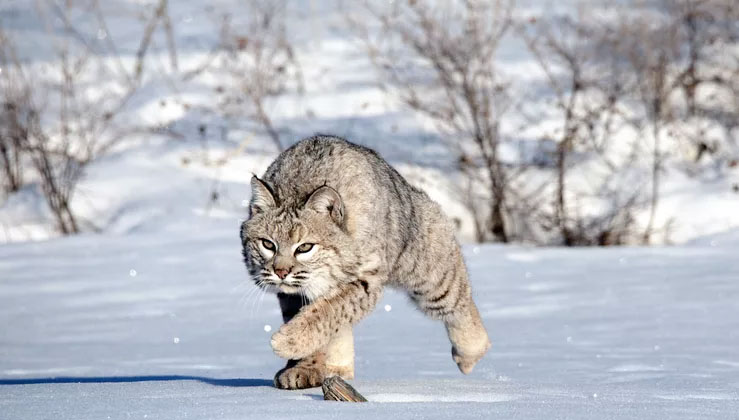
Discover eight captivating facts about the secretive and powerful bobcat, North America’s most widespread wildcat, known for its signature short tail and impressive survival skills.
Meet the Bobcat: North America’s Common but Elusive Wildcat
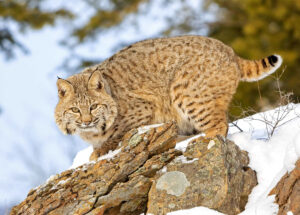
The bobcat (Lynx rufus) holds the title as the most widespread wildcat across North America, with an estimated population between 2.3 and 3.5 million. Though they’re found from Mexico to southern Canada, bobcats are rarely spotted, thanks to their preference for secluded habitats like dense brush, forests, wetlands, and rocky outcrops. Even in suburban settings, they remain ghostlike, often active when humans are not. Their most defining feature is their “bobbed” tail, measuring just 4 to 8 inches long, from which they get their name.
1. The Smallest Member of the Lynx Family
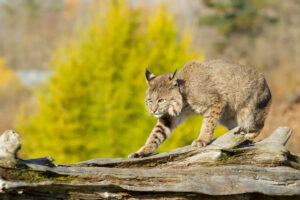
Though closely related to the Canada lynx, bobcats are noticeably smaller. Adults typically weigh between 8 and 33 pounds and grow 25 to 42 inches in length (excluding the tail). Northern bobcats tend to be larger than their southern counterparts, with males generally outweighing females. These medium-sized wildcats are about the size of a cocker spaniel but pack far more muscle and agility into their frames.
2. Masters of Disguise: Often Mistaken for Other Animals
Due to their varied coat patterns and compact size, bobcats are frequently misidentified. They’re sometimes mistaken for domestic cats, stray kittens, or even larger wildcats like mountain lions or Canada lynx. Biologists can even struggle to differentiate between bobcats and lynx without seeing their distinctive paw prints—the lynx sports wide, fur-covered feet ideal for snow travel.
3. Rodent Specialists with a Flexible Diet
Bobcats are skilled carnivores that mostly prey on small mammals like rabbits, squirrels, rats, and mice. Though they can take down larger animals such as deer (particularly young or injured ones), they prefer quick and easy prey. Their reputation for attacking pets is overstated, although unsecured chickens or small outdoor animals may occasionally be targeted. Surprisingly, some bobcats have been known to eat fish—and even small sharks!
4. Lone Rangers with Strong Territorial Instincts
Bobcats are solitary animals with well-defined territories that they mark using urine, feces, and scent glands. Females typically claim ranges around 6 square miles, while males may roam areas up to 25 square miles, overlapping with multiple females but not other males. This solitary lifestyle helps reduce competition for food and mating opportunities.
5. Home Is Wherever They Hide
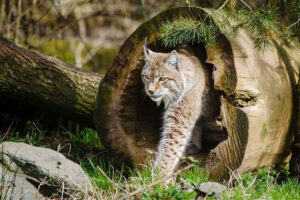
Rather than relying on a single den, bobcats use multiple shelters within their range. The primary or “natal” den—used for birthing and raising kittens—is often a rock crevice or hollow tree. They also make use of backup dens in brush piles, fallen logs, or even old animal burrows. These auxiliary dens offer safety and quick access to prey, allowing bobcats to move efficiently through their territory.
6. Kittens Learn Survival from Their Mothers
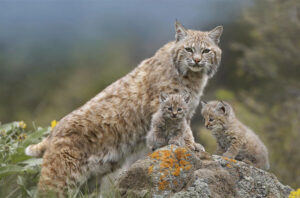
Female bobcats give birth to litters of one to six kittens, usually in early spring. The young stay in the natal den for about two months, during which their mother brings food and begins teaching them to hunt. By the time they are 11 months old, the kittens are fully independent and are pushed out to establish their own territories.
7. Bobcats Face Both Old and New Threats
Although bobcat numbers have rebounded thanks to conservation efforts, they still face several threats. Overhunting for their pelts in the early 20th century reduced populations drastically. Today, habitat loss, rodenticide poisoning, and predation by invasive species like Burmese pythons in Florida all present challenges. While the IUCN lists bobcats as a species of “Least Concern,” the Mexican bobcat remains federally endangered in the U.S. and is protected under international trade laws.
8. Built for the Chase: Bobcats Are Quick and Agile
Bobcats are built for explosive speed rather than endurance. They can sprint up to 30 mph, pouncing on prey with precision and power. When running, bobcats often use a unique bounding gait—placing their back paws where their front paws were—giving them a “bobbing” motion that’s both stealthy and efficient.