
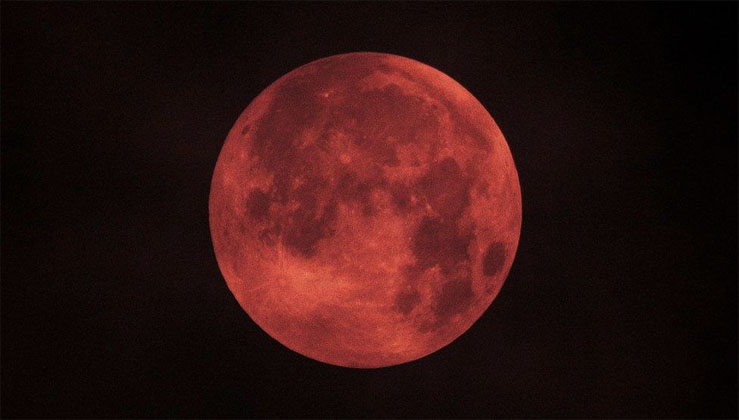
A dramatic Blood Moon will rise on September 7, 2025. Discover where you can see the full lunar eclipse, what makes it turn red, and why this month’s full Moon is also called the Corn Moon.
Blood Moon Eclipse on September 7, 2025
A total lunar eclipse — often called a Blood Moon for its striking red hue — is set to occur on Sunday, September 7, 2025. Unlike a solar eclipse, this event can be safely observed with the naked eye, and it promises to be one of the most spectacular skywatching opportunities of the year.
Where the Eclipse Will Be Visible
Those in India, China, Russia, Australia, New Zealand, eastern Africa, and much of central Asia will get the best seats for the full event. The eclipse will also be visible in parts of Antarctica, the Indian Ocean, and the western Pacific. Unfortunately, most of North America will miss out. Only the far western regions of Alaska may catch a partial view. Observers in the UK and western Europe might be able to glimpse totality just as the Moon rises on the horizon.
Why the Moon Turns Red
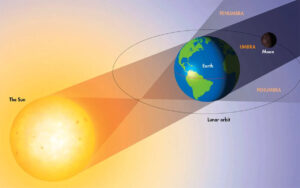
A lunar eclipse happens when the Sun, Earth, and Moon align in a straight line, with Earth in the middle. As sunlight passes through Earth’s atmosphere on its way to the Moon, shorter blue wavelengths are scattered more than longer red wavelengths. The red light that makes it through is refracted and cast onto the Moon, giving it a rusty, blood-red glow. This is why total lunar eclipses are nicknamed “Blood Moons.”
The Corn Moon Eclipse
The September full Moon is traditionally called the Corn Moon, a name rooted in seasonal cycles and agricultural traditions. Each month’s full Moon has its own nickname — February’s is the Snow Moon, while June’s is the Strawberry Moon. This year’s Corn Moon is particularly special because it coincides with a total lunar eclipse. While the name doesn’t change the Moon’s actual appearance, the “Corn Moon Eclipse” is a rare blending of folklore and astronomy.
Eclipse Timings (UTC)
For those planning to watch, here are the official timings in Coordinated Universal Time (UTC):
3:28 PM UTC – Penumbral eclipse begins
4:27 PM UTC – Partial eclipse begins
5:30 PM UTC – Total eclipse begins
6:11 PM UTC – Maximum eclipse
6:52 PM UTC – Total eclipse ends
7:56 PM UTC – Partial eclipse ends
8:55 PM UTC – Penumbral eclipse ends
Watching the Eclipse Online
If clouds or geography keep you from seeing it in person, you can still experience the show. Websites like Time and Date will livestream the eclipse, allowing viewers across the world to enjoy the Blood Moon as it unfolds.