Meet Hyperion, the tallest tree on Earth—hidden deep within California’s Redwood National Park. Discover how this ancient coastal redwood reached an astonishing 379.7 feet, and why its exact location remains a closely guarded secret.
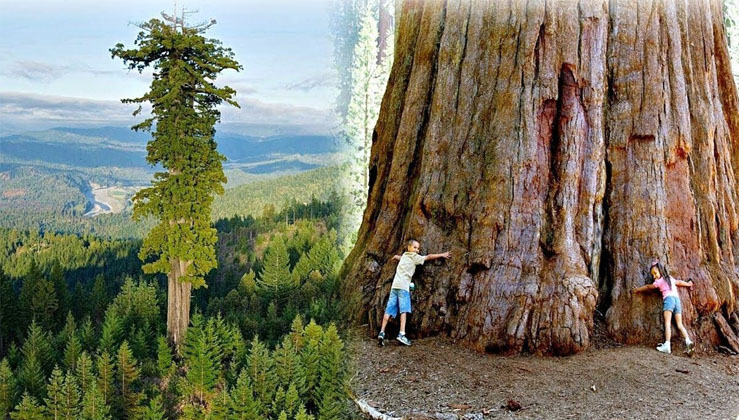
Hidden among the mist-shrouded forests of Northern California stands a tree unlike any other on Earth. Known as Hyperion, this coastal redwood (Sequoia sempervirens) has earned its place in history as the tallest known living tree in the world, reaching a staggering 379.7 feet (115.92 meters) in height. To grasp its sheer magnitude, consider this: Hyperion stands significantly taller than London’s iconic Big Ben tower, which rises 315 feet into the sky. Hyperion was discovered in August 2006 by naturalists Chris Atkins and Michael Taylor during an exploratory hike in a remote part of Redwood National Park, California.
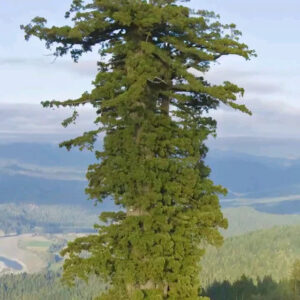
Until that moment, the record-holder for tallest tree was another redwood called the Stratosphere Giant, measuring 369 feet. But Hyperion’s surprising height quickly dethroned its predecessor and captivated scientists, conservationists, and tree lovers worldwide. What makes Hyperion so extraordinary isn’t just its height but how it got there. Coastal redwoods are the tallest species of tree on Earth, thanks to a perfect combination of genetic potential and environmental factors. The coastal region where Hyperion thrives provides consistent moisture from fog, nutrient-rich soils, and mild temperatures—all crucial ingredients for optimal growth.
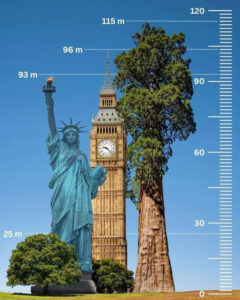
Scientists estimate that Hyperion is between 700 and 800 years old, meaning it began growing during the Middle Ages, long before modern civilization even knew of its existence. Despite its fame, Hyperion’s exact location remains a closely guarded secret. This secrecy is intentional—meant to protect the tree from potential damage due to foot traffic, vandalism, or soil compaction. Redwood National and State Parks are home to over 100,000 acres of ancient old-growth redwoods, many of which tower well over 300 feet and have stood for hundreds, if not thousands, of years.
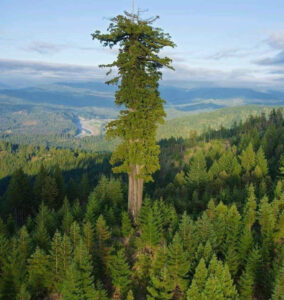
The discovery of Hyperion has also reignited scientific interest in canopy research and forest ecology. These massive trees play a crucial role in carbon sequestration, biodiversity support, and climate regulation. Hyperion’s towering form serves as a living symbol of why forest conservation matters more than ever. In the end, Hyperion is more than just a tall tree—it is a testament to nature’s ability to inspire awe, to endure, and to flourish when given the right conditions. Though most will never see it in person, Hyperion’s legacy continues to grow, reminding us of the silent giants that shape our world and the responsibility we share to protect them.