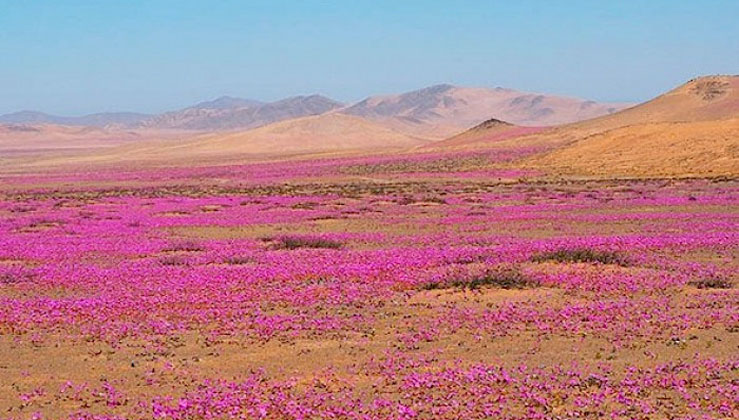
In Chile’s Atacama Desert, a rare and breathtaking event transforms one of the driest places on Earth into a vibrant sea of wildflowers. Learn how a few millimeters of rain awaken a hidden ecosystem and why protecting it matters more than ever.
The Atacama Desert Blooms: A Natural Rarity
Beneath the dry soil of Chile’s Atacama Desert lie millions of seeds in waiting. When rainfall exceeds approximately 15 millimeters and the temperature and light conditions align just right, a miracle occurs: the desert bursts into bloom. This rare natural event, known as the “flowering desert,” turns the barren landscape into a vibrant mosaic of wildflowers—some not found anywhere else on Earth. According to biologist María Fernanda Pérez, the desert bloom follows significant rainfall events and primarily consists of herbaceous plants. The more rain, the greater the diversity and coverage of the bloom. Events such as the one in 2017, when 50 mm of rain fell, were especially spectacular.
El Niño’s Role in Awakening the Atacama
The flowering desert is closely tied to climate cycles. Warmer El Niño years lead to increased evaporation and rainfall, creating the ideal conditions for the seeds to germinate. In contrast, La Niña years tend to be cooler and drier, suppressing bloom potential. While the bloom most often occurs in the Copiapó, Huasco, and Caldera regions of the Atacama, rare and diverse blooms have also been documented further north in Antofagasta and near Iquique—places with even less rainfall but high rates of endemism. In 2021, despite just 10 mm of rain, the Atacama still experienced a localized bloom inland from Copiapó and around Caldera, offering a glimpse of the phenomenon’s resilience.
A Journey into the Flower Route
Driving along Route 5 North, a traveler sees nothing but lifeless plains until suddenly, near the junction leading to Nantoco, the hills blush with color. Blanketing the desert in intense fuchsia are vast fields of rock Purslane (Cistanthe grandiflora), the most iconic flower of the Atacama bloom.
Closer inspection reveals a living rainbow:
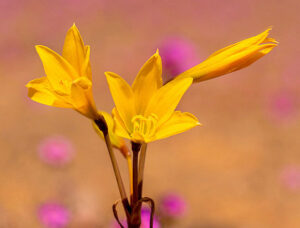
-Añañucas (Zephyranthes bagnoldii) in yellow and orange
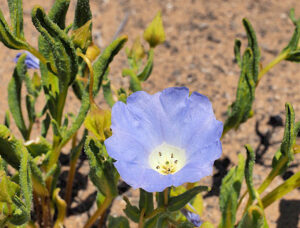
-Suspiros de campo blanco (Nolana baccata)
-Suspiros (Nolana carnosa and Nolana acuminata)
-Malvillas (Cristaria species)
-Coronilla del fraile (Encelia canescens)
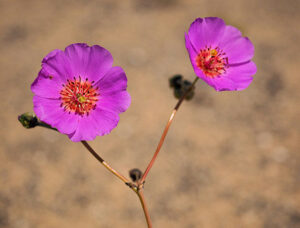
Dormant Seeds: Nature’s Sleeping Beauties
As Professor Ana María Mujica, who has studied desert flora for over 30 years, explains, most of the flowering desert plants are annual herbaceous species. These plants live out their life cycle—germination, flowering, fruiting, and dying—within three to six months, leaving behind seeds for the next bloom. These seeds have incredibly tough outer coats that can withstand years of extreme conditions. Some remain dormant for up to a decade. Others survive through underground organs like bulbs, rhizomes, and corms that store nutrients over the long dry years. According to a 2017 study by Chile’s Institute for Agricultural Research, the Atacama flowering desert hosts 1,893 plant species. Of those, 32% are endemic to South America and 58% are exclusive to Chile—making conservation all the more urgent.
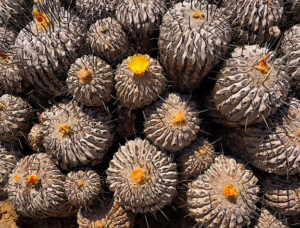
Hidden Among Thorns: The Star Cactus of Atacama
In this seemingly inhospitable landscape, cacti thrive—particularly the iconic Copiapoa species. Native to northern Chile’s desert coast, this genus includes about 26 species, many of which are nearly spherical and coated in a waxy, white protective layer. The most renowned is Copiapoa dealbata, found in the Llanos de Challe National Park. These cacti, with yellow flowers blooming amid spines, grow in cushion-like clusters up to 1 meter high and 2 meters wide. Despite their hardiness, these plants face significant threats. Their restricted distribution and low reproductive rates have landed them on the vulnerable species list. Illegal poaching has also become a serious issue, with individual plants fetching $500 to $1,500 in foreign markets.
A Short-Lived Ecosystem with Big Impacts
The flowering desert is more than just a spectacle—it’s a thriving, if short-lived, ecosystem. “It lasts only a few weeks, but during that time it supports birds, insects, reptiles, and small mammals,” says Mujica. Insects, especially, play a key role in pollination, helping ensure the survival and spread of plant species. Some insect species are unique to this ecosystem and only emerge during bloom years. “The diversity of insects is spectacular,” Pérez notes.
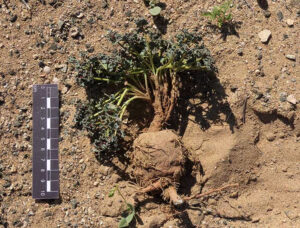
Fragile Beauty: Why Conservation Matters
Because of its rarity and fragility, the flowering desert is easily damaged. Off-road vehicles, illegal plant collection, mining, and livestock grazing can permanently disrupt the ecosystem. Even removing a single bulb or cactus can prevent its return for decades. Both Mujica and Pérez stress the importance of awareness and education. “People need to understand that a bulb can be 15 to 20 years old,” Pérez says. “If they knew that, they wouldn’t dig it up.” Conservation strategies like seed banks and botanical gardens are crucial for long-term survival.
As Pérez puts it, “We must revalue our natural history.”