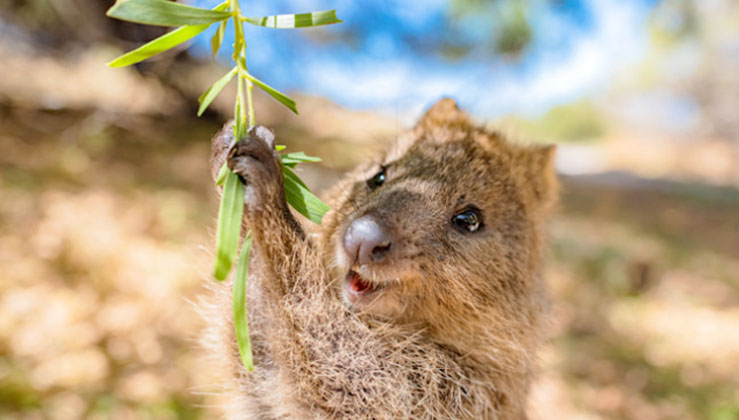
Famous for their adorable smiles and viral selfies, quokkas are charming marsupials native to Australia. But despite their cheerful appearance, these vulnerable creatures face serious threats in the wild.
Meet the Quokka: Australia’s Smiling Marsupial
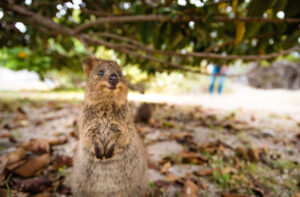
With their fuzzy bodies, round ears, and endearing facial expressions, quokkas look like they’ve leapt out of a storybook. Native to southwestern Australia, these small herbivorous marsupials have gained international popularity for their seemingly cheerful demeanor — an illusion created by the natural shape of their mouths, which makes them appear to smile constantly. Thanks to the #quokkaselfie trend on social media, quokkas have charmed millions around the world. But as their habitat continues to shrink and threats multiply, their survival is becoming increasingly uncertain.
Where Quokkas Call Home
The largest concentration of quokkas lives on Rottnest Island, located just off the coast of Perth in Western Australia. This island, home to an estimated 10,000 quokkas, earned its name from Dutch explorers in the 1600s who mistook the quokkas for giant rats and dubbed the area “Rotte nest” — meaning “rat’s nest.” Although small pockets of quokkas remain on mainland Australia, most now inhabit remote forested areas, where dense vegetation offers vital shelter from predators.
Are Quokkas Really That Friendly?
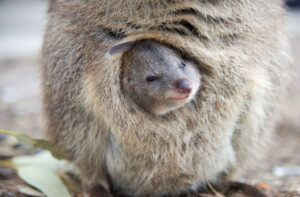
Quokkas have become symbols of friendliness and approachability, largely because of their tendency to appear alongside tourists in photographs. But their cuddly reputation isn’t entirely accurate. Larisa DeSantis, a vertebrate paleontologist at Vanderbilt University, warns that while they may seem docile, quokkas can bite if they feel threatened. “You don’t really want to get that close to them,” she explains. “It’s possible to snap a good photo without invading their space.” One widespread myth that’s added to their notoriety claims quokkas throw their babies at predators to escape danger. While they don’t literally hurl their young, studies confirm that female quokkas have been observed relaxing their pouches and dropping their joeys when confronted by threats — a survival strategy that allows the mother to escape and possibly reproduce again.
A Species Under Pressure
Once common across southwestern Australia, quokkas are now classified as a vulnerable species. Today, fewer than 15,000 remain in the wild. Their shrinking numbers are the result of multiple overlapping challenges, including habitat destruction, invasive species, and worsening climate conditions. “Quokkas are under siege from many sides,” says DeSantis. “The introduction of invasive species like foxes, combined with habitat fragmentation and more intense wildfires due to climate change, has put them in a very tough spot.” While quokkas on islands like Rottnest are doing relatively well, mainland populations have suffered dramatic losses.
How Invasive Species Changed Everything
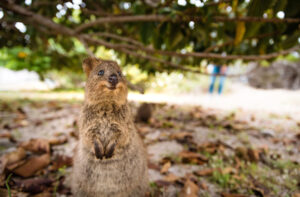
The arrival of European colonizers in Australia brought devastating changes to the quokka’s ecosystem. Along with settlers came invasive species such as foxes, goats, and rabbits — all of which disrupted the natural balance. “Foxes are one of the biggest direct threats,” explains DeSantis. “They prey on quokkas, while other invasive animals compete for food and resources.”
Mainland quokkas have been forced into dense forested areas where thick vegetation helps them evade predators. In contrast, island populations benefit from the absence of foxes and a more stable environment.
Understanding Quokkas to Save Them
Research is now playing a critical role in shaping conservation efforts. DeSantis and her team published a study in the Journal of Zoology in 2020 showing that, historically, quokkas thrived in “mosaic habitats” — landscapes with a mix of dense and open forest. “This changes the way we think about their ideal habitat,” she says. “If we can eliminate foxes from certain areas, quokkas could expand beyond these dense forest patches.” Other recent studies have explored how quokkas respond to wildfires and are even mapping the species’ genome to better understand its biology and resilience.
Hope for the World’s Happiest Animal
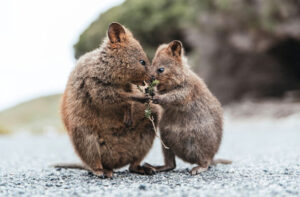
Quokkas may be smiling, but their future depends on proactive conservation. Efforts to control invasive predators, preserve habitat, and understand how quokkas adapt to human-altered environments are crucial. As DeSantis notes, understanding how animals like the quokka are adjusting to urbanization and environmental pressures is key to long-term conservation.
“It’s not just about studying animals in pristine places anymore,” she says. “We need to understand how to coexist — and help them thrive — in the real world we share.”