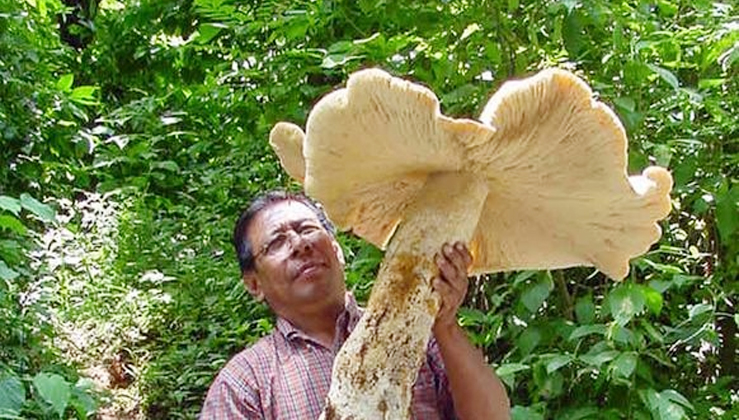
Termitomyces titanicus, the world’s largest edible mushroom, thrives in symbiosis with termites—growing over one meter wide and feeding entire families in West Africa and Zambia.
Termite Allies and Giant Caps: The World’s Largest Edible Mushroom
In the woodlands and savannas of Zambia and parts of West Africa, a culinary and ecological marvel towers over all other fungi: Termitomyces titanicus. This colossal mushroom, revered by locals and foragers alike, holds the title of the largest edible mushroom on Earth, with a cap that can grow over one meter (3 feet) wide. While the massive Armillaria fungus in Oregon may claim the record for largest organism by area, Termitomyces titanicus wins in the edible category—and not just for its size. In Zambian culture, where mushroom foraging is deeply woven into daily life, this mushroom is a prized seasonal delicacy.
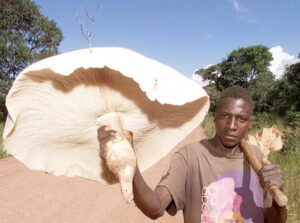
Surprisingly, despite its enormous size and cultural prominence, Termitomyces titanicus remained undocumented in Western science until 1980. The key to its impressive size lies in its remarkable partnership with termites. These fungi don’t just coexist with termites—they thrive in a tightly knit symbiotic relationship within termite mounds. The termites supply the fungi with a constant stream of digested plant matter and build the perfect environment for fungal growth—stable temperatures, optimal humidity, and access to nutrients.
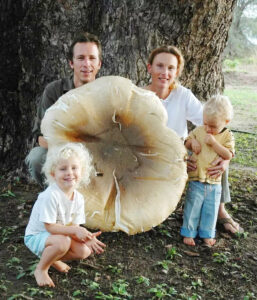
In return, the mushroom breaks down tough plant fibers, making them digestible for the termites. Decayed parts of the mushroom also serve as food for the colony.But why does this species grow so massive? The answer lies in both abundant resources and evolutionary necessity. A termite mound can house millions of insects constantly bringing in organic material, creating an energy-rich environment for the fungus. Additionally, in sparse savanna ecosystems where termite mounds can be spread far apart, the mushroom must produce an enormous amount of spores to increase the likelihood of being discovered by termites from another colony.
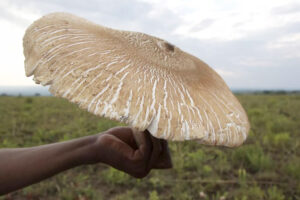
These evolutionary pressures have led to the emergence of one of the largest mushrooms in the world. More spores mean a higher chance of successful dispersion—and a better shot at finding a new termite colony to partner with. Termitomyces titanicus emerges during the rainy season, particularly in winter, which marks peak mushroom harvesting time. Its meaty texture and smoky, savory flavor make it a sought-after ingredient. In fact, a single cap can feed an entire family, making it both a culinary treasure and a natural wonder.