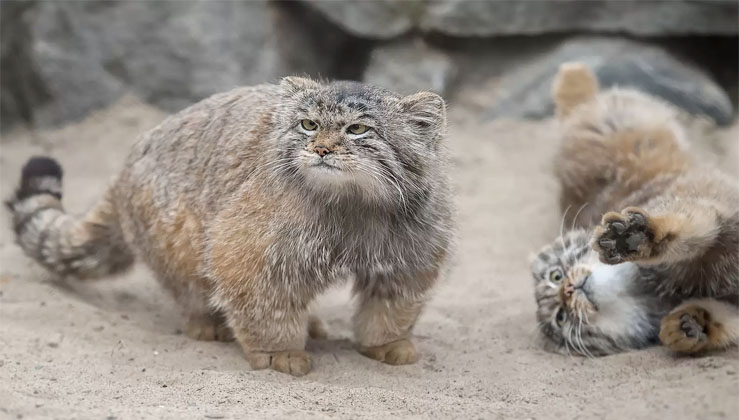
In a surprising discovery, scientists have found rare Pallas’s cats living high on Mount Everest, marking an exciting moment for wildlife research and conservation efforts.
A team of field researchers has uncovered a remarkable discovery on the slopes of Mount Everest—rare and fluffy Pallas’s cats, also known as manuls, are quietly living in one of the planet’s harshest environments. The finding is not only scientifically significant but also irresistibly adorable.These elusive felines were first confirmed to inhabit the Everest region in 2019, with at least two individuals identified on the mountain’s Southern Flank. For decades, their presence in the Himalayas went completely unnoticed, making the discovery a milestone for scientists and conservationists alike.
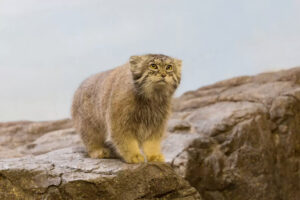
Pallas’s cats are often mistaken for domestic cats due to their similar size, but they come with some endearing differences. With short legs, dense fur, and round, flat faces, they look almost like animated plush toys brought to life. However, their fluffy appearance hides their true build—they are surprisingly light and small, with fur that serves as essential insulation in cold, alpine climates. Expert climbers, these wildcats are well-suited to high-altitude life. Their ability to navigate rocky crevices and steep cliffs gives them a natural advantage in such rugged terrain.
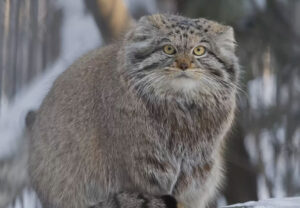
While they may look cute and cuddly, Pallas’s cats are solitary and territorial, and definitely not suitable as pets. Observing them from afar, especially in such a remote environment, is a rare privilege. Their cartoon-like features—large, expressive eyes, stubby ears, and fluffy builds—only enhance their charm. Imagining them casually prowling across the snowy slopes of Everest, tucked into rocky dens, paints a delightful picture of alpine wildlife. “It is phenomenal to discover proof of this rare and remarkable species at the top of the world,” said Dr. Tracie Seimon, a researcher with the Wildlife Conservation Society’s Zoological Health Program, who contributed to the findings.
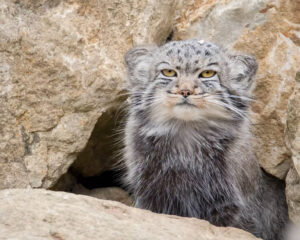
The discovery was published as part of broader conservation research in the region. Now that scientists know Pallas’s cats are thriving in the Everest region, the next step is to conduct further research to determine their population size, distribution, and ecological impact. These insights will be crucial for developing strategies to protect these fascinating felines in one of the planet’s most extreme habitats. For now, the discovery serves as both a scientific triumph and a heartwarming reminder of how much there still is to learn—and love—about Earth’s most remote wildlife.