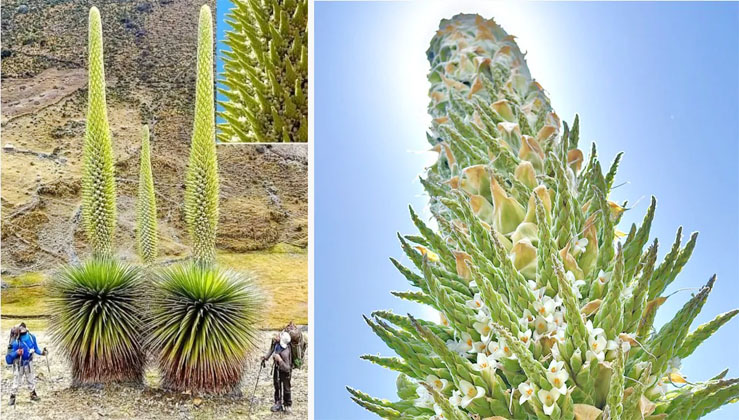
The Queen of the Andes is the largest bromeliad on Earth, towering over 30 feet tall. Native to South America’s high-altitude regions, this rare plant produces its enormous flower spike only once every century.
Among the 3,000 species of bromeliads known to science, Puya raimondii easily stands above the rest—literally. Often referred to as the “Queen of the Andes,” this extraordinary plant can reach a towering height of over 30 feet and boasts one of the tallest flower spikes on the planet, sometimes exceeding 25 feet. Native to the remote, rugged highlands of the Andes Mountains in Bolivia and Peru, the Queen of the Andes thrives at elevations between 3,200 and 4,800 meters (10,500–15,700 feet).
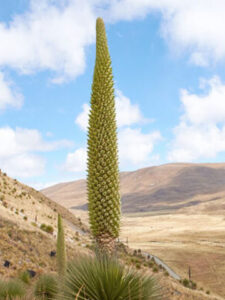
These harsh alpine conditions have shaped its unique biology and slow-growing lifecycle. What truly sets this plant apart is its incredible reproductive cycle. After more than 80 years—sometimes closer to 100—of quiet vegetative growth, the Queen of the Andes produces a single, monumental bloom. The colossal flower spike contains thousands of small white or greenish-white blossoms, attracting birds and insects from miles around.
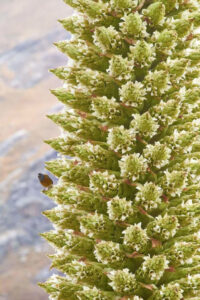
Once the flowering phase is complete, the plant dies, having used all its energy in this final, spectacular effort to reproduce. Due to habitat loss, climate change, and its slow growth, Puya raimondii is now classified as endangered, making its rare bloom even more precious to witness. The Queen of the Andes is a true testament to the resilience and majesty of nature—an ancient marvel that reminds us of the hidden wonders still growing, ever so slowly, on our planet.