Discover 11 of the most colorful and bizarre fungi species in the world, from bioluminescent mushrooms to those that ooze “blood.” These fungi are as weird as they are wonderful!
The world of fungi is rich in mystery and wonder. While some species are revered for their medicinal properties—like penicillin—or cherished for their role in cuisine, others are notorious for causing infections like athlete’s foot. But there’s another side to fungi that often goes unnoticed: their jaw-dropping visual beauty. This list highlights 11 colorful and curious mushrooms and fungi species that break the mold of the usual supermarket fare. From violet coral to glow-in-the-dark tree fungus, these fungi showcase the aesthetic splendor of the natural world.
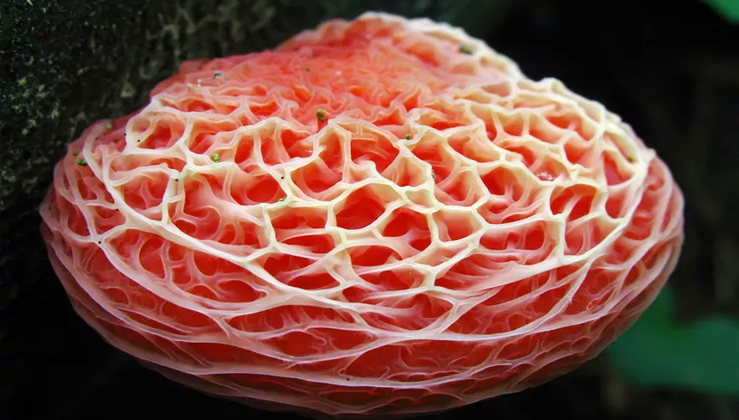
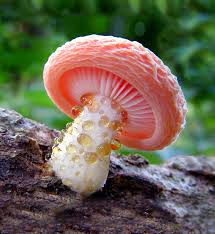
1. Rhodotus palmatus (Wrinkled Peach)
Nicknamed the wrinkled peach for its soft pink hue and ridged cap, Rhodotus palmatus thrives in environments with alternating wet and dry periods, which helps form its distinctive texture. Its short, pink gills add to its visual charm. Native to parts of England and the central United States, this rare beauty is considered threatened in Europe.
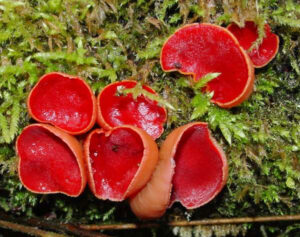
2. Sarcoscypha coccinea (Scarlet Elf Cup)
Sarcoscypha coccinea, commonly known as the scarlet elf cup, lights up forest floors with its bright red cup-shaped fruiting bodies. Typically found on decaying wood in damp, cool forests, this photogenic fungus appears in late winter to early spring, bringing a splash of color to dreary landscapes.
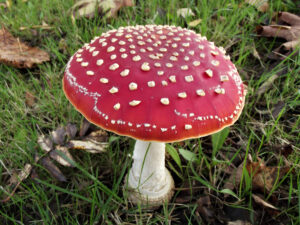
3. Amanita muscaria (Fly Agaric)
With its iconic red cap speckled with white dots, the fly agaric looks like it leapt straight from a fairytale. Don’t let the whimsical appearance fool you—Amanita muscaria contains psychoactive compounds. Found across North America, Europe, and Asia, its color can range from red and orange to yellow or even white, depending on its geographic location.
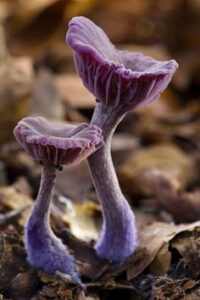
4. Laccaria amethystina (Amethyst Deceiver)
This small but vibrant purple mushroom is aptly named the amethyst deceiver. Found on forest floors near beech and other trees, Laccaria amethystina is edible but often confused with poisonous lookalikes. As it ages, its vivid purple hue fades to brown.
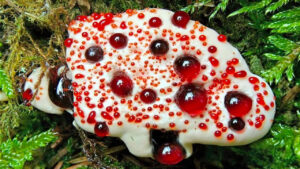
5. Hydnellum peckii (Bleeding Tooth Fungus)
Perhaps the creepiest of the bunch, the bleeding tooth fungus (Hydnellum peckii) oozes a red liquid that looks disturbingly like blood. This effect is due to guttation, where excess moisture pushes pigments to the surface. Found in North America, Europe, Iran, and South Korea, this bitter-tasting fungus is safe but unappealing to eat.
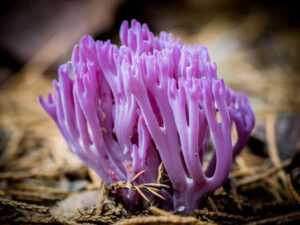
6. Clavaria zollingeri (Violet Coral)
Looking like a cluster of miniature antlers, the violet coral (Clavaria zollingeri) stands out with its vibrant purple tubes. It grows in mossy areas beneath oak and hickory trees in eastern North America and adds a pop of color to the forest floor.
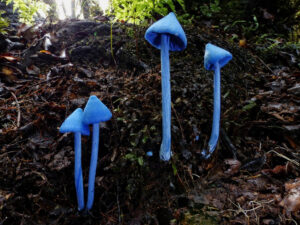
7. Entoloma hochstetteri (Blue Pinkgill)
Native to New Zealand, the blue pinkgill (Entoloma hochstetteri) is known for its electric blue color. The Māori named it werewere-kōkako, referencing its resemblance to the plumage of the kōkako bird. Though tiny—only about an inch across—it’s a showstopper. This mushroom is not edible.
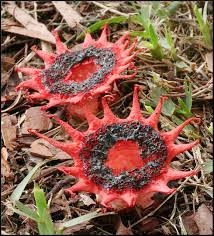
8. Aseroe rubra (Anemone Stinkhorn)
Also called the sea anemone fungus or starfish fungus, Aseroe rubra looks like it belongs on a coral reef. Found in Australia, it grows in mulch and grassy areas. Despite its striking star shape, it emits a foul odor to attract flies, which help disperse its spores.
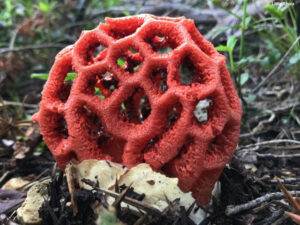
9. Clathrus ruber (Latticed Stinkhorn)
The latticed stinkhorn (Clathrus ruber) resembles a red coral structure or a strange jungle gym. It releases a putrid, meat-like odor that attracts flies, which help with spore distribution. Found in the Mediterranean, Europe, and North American coastlines, this mushroom transforms from a white egg-like form into a vibrant, open lattice as it matures.
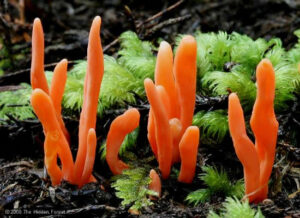
10. Clavulinopsis sulcata (Coral Finger Fungus)
With spiky fingers in hues of orange and pink, Clavulinopsis sulcata is another member of the coral fungi group. Originally identified in South Africa, it’s now found across Asia, North America, eastern Australia, and New Zealand. It thrives in plant litter and moist soils.
11. Panellus stipticus (Bioluminescent Mushroom)
By day, Panellus stipticus is an unremarkable beige mushroom growing on decaying wood. But by night, its eastern North American strain glows with a greenish light, thanks to bioluminescence. Not edible and described as having a “puckery” taste, this fungus is more of a spectacle than a snack.