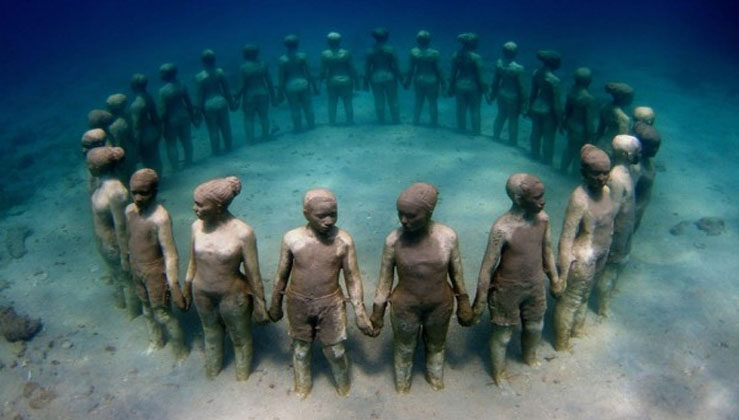
Discover over 400 life-sized sculptures beneath the waves in Cancun’s unique Underwater Museum—where art meets marine conservation in a stunning aquatic setting.
Just beneath the shimmering turquoise waters of Cancun lies a museum like no other—a surreal underwater gallery that blends artistic expression with environmental conservation. Located near the famed Manchones Reef, the Cancun Underwater Museum (MUSA) showcases more than 400 submerged sculptures created by British artist Jason deCaires Taylor. This captivating collection includes scenes from everyday life, iconic moments like the Last Supper, and imaginative creations such as The Phoenix, a kinetic statue featuring coral-covered wings.
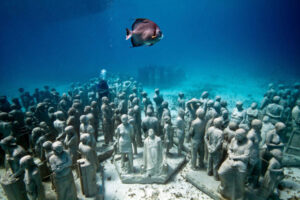
What makes this museum truly special is its mission. Designed using pH-neutral marine cement, the sculptures serve as artificial reefs that promote coral growth and marine biodiversity, easing pressure off nearby natural reefs impacted by heavy tourism. Whether you’re an experienced scuba diver or a casual snorkeler, MUSA offers a way to experience art and nature side by side. For those who prefer to stay dry, glass-bottomed boat tours provide a clear view of this breathtaking underwater world. It’s more than a dive—it’s an immersion into creativity and conservation.
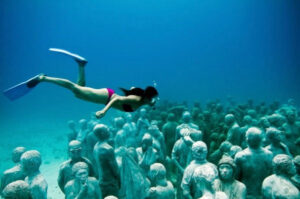
Slip on a mask, grab your snorkel, and prepare to discover a world where sculpture and sea life coexist in harmony. Just off the coast of Cancun, Mexico, lies one of the world’s most extraordinary artistic experiences: the Cancun Underwater Museum of Art (MUSA). Situated near the Manchones Reef, this submerged wonderland is home to over 400 life-sized sculptures created with a purpose far beyond aesthetics. Artist Jason deCaires Taylor designed each piece using pH-neutral materials, ensuring they are safe for marine ecosystems and ideal for encouraging coral and fish populations to flourish.
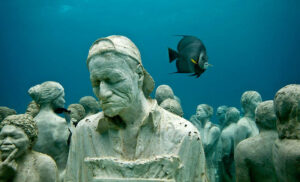
The museum was born out of a need to redirect tourism away from fragile reefs, and it now stands as a symbol of how art can actively contribute to ecological recovery. The exhibits range from powerful social commentaries to imaginative pieces like The Phoenix, a moving sculpture adorned with coral that sways gently in the current. Visitors can explore the museum in two galleries: one at greater depths for scuba divers and a shallower area accessible to snorkelers. For those who prefer staying dry, glass-bottom boat tours offer a fantastic way to view this underwater world without getting wet.
MUSA proves that beauty, creativity, and conservation can coexist—beneath the waves and beyond the imagination.